Baghdadi Jews came to Calcutta from Iraq, Syria and Persia from the late eighteenth century, trading in indigo, opium, jute and later real estate. The community reached perhaps five or six thousand by the 1940s and built synagogues, schools, a hospital and a cemetery.
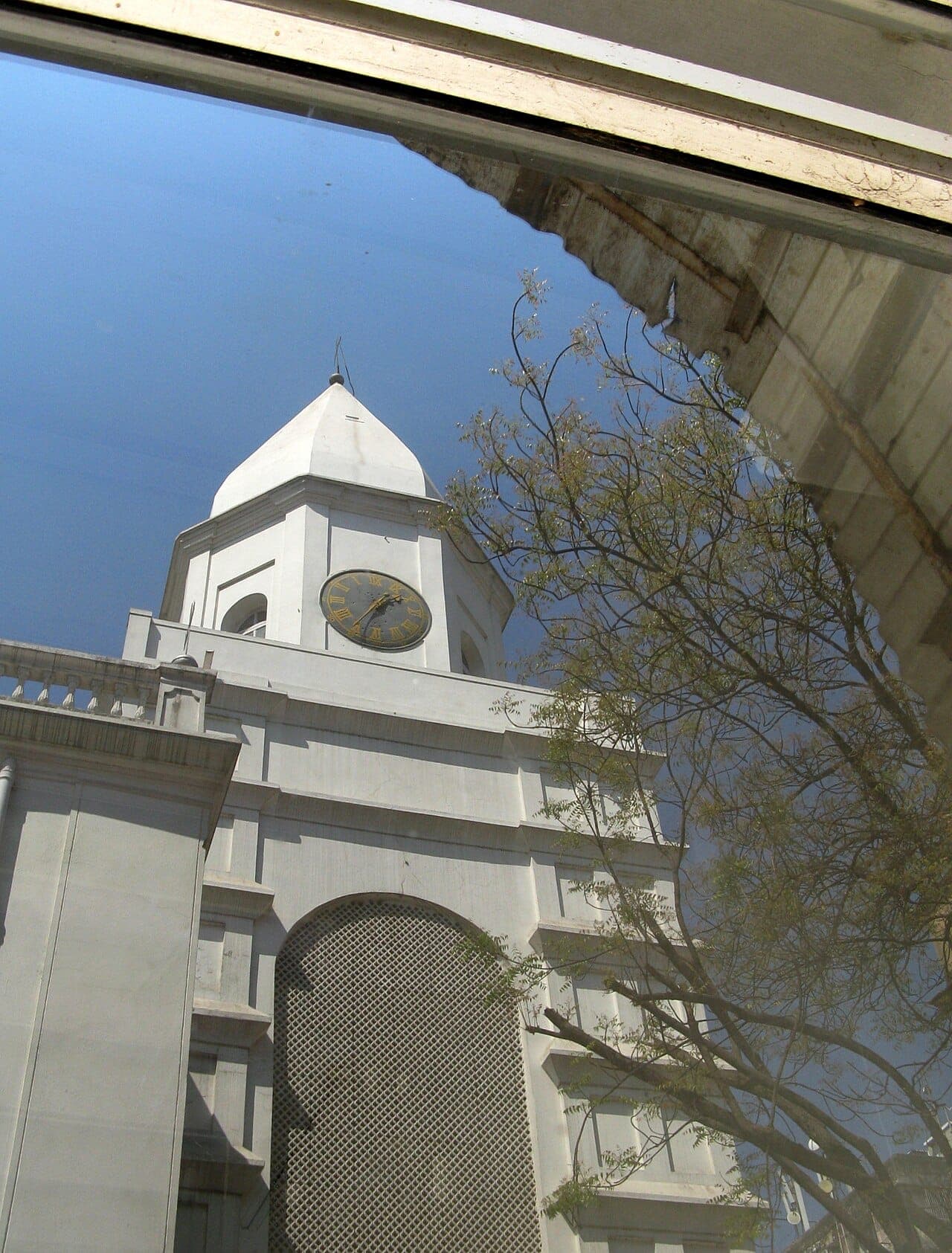
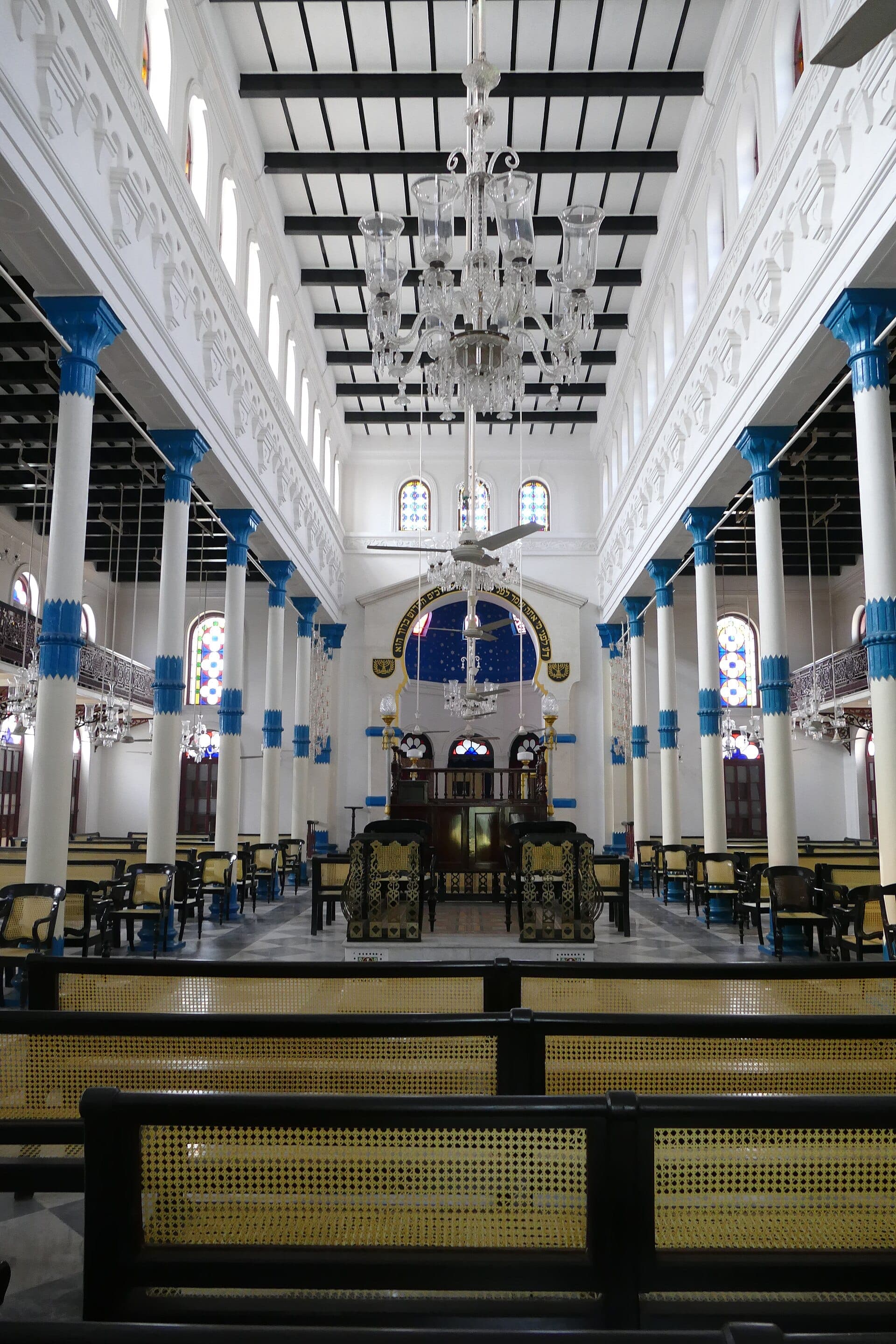
Beth El was built in 1856 on Pollock Street. Magen David, larger and more elaborate, followed in 1884 around the corner. Neveh Shalome, the oldest, dates from 1826 and was rebuilt in 1911.
Almost the entire community left after 1947 and 1948, for Israel, Britain and Australia. Fewer than twenty Jews now live in Kolkata, and there has not been a regular minyan for decades.
The buildings survive because they are looked after. The caretakers of all three synagogues are Muslim, several from families who have held the job for generations, and they hold the keys and show visitors round. It is one of the better facts about this city.
What the guidebook leaves out
Nahoum & Sons in New Market, founded 1902, is the last of the community's businesses. The plum cake at Christmas is not a tourist thing; the queue is real.