Kolkata during Puja
For five days, the city stops being a city.
UNESCO inscribed Durga Puja on the Representative List of the Intangible Cultural Heritage of Humanity in December 2021, the first festival in India to be listed.
Until Mahasasthi
––
Days
––
Hours
––
Minutes
––
Seconds
The city is getting ready.
I
Chapter I
The Making
কুমোরটুলি
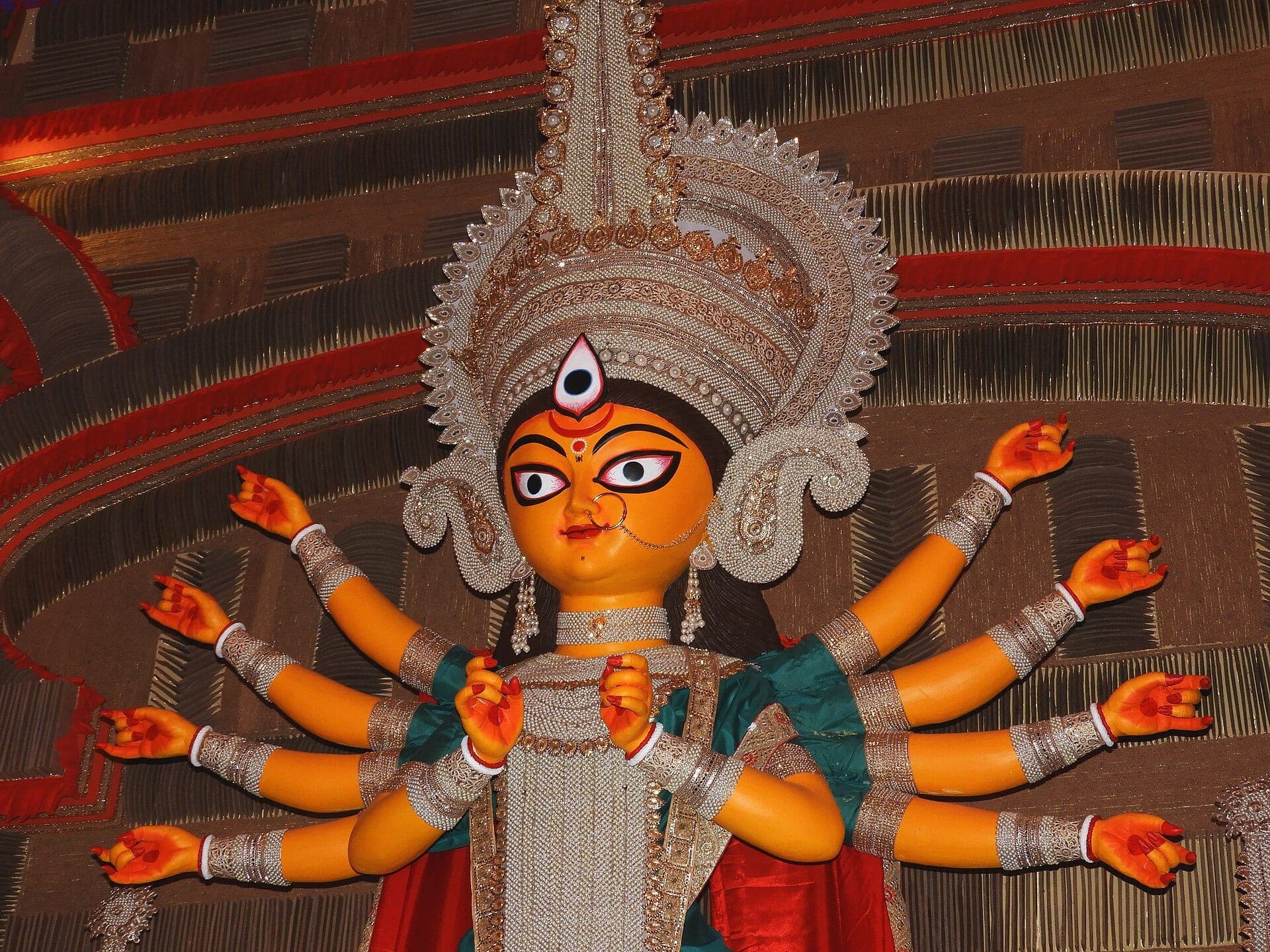
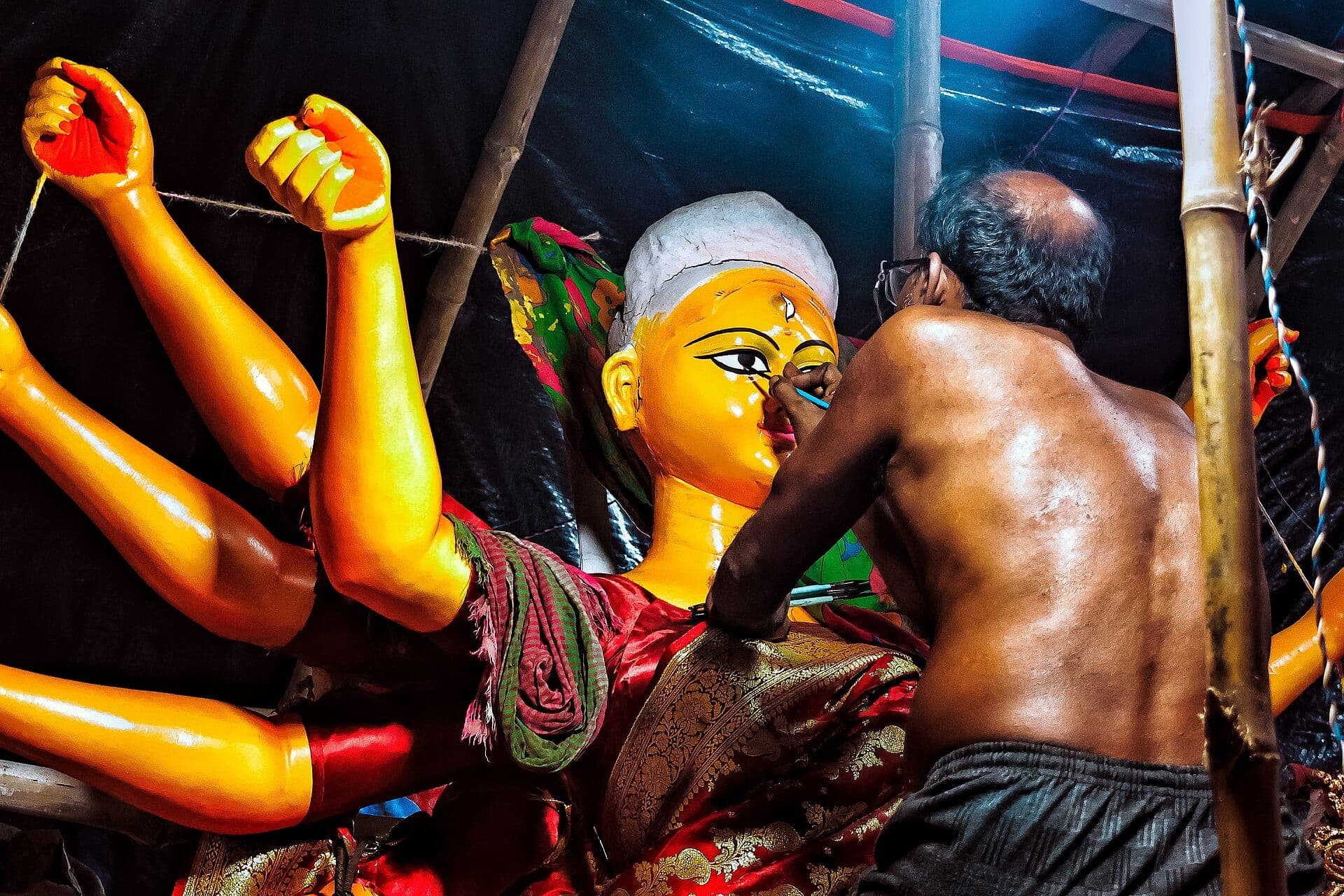
It begins in July, in lanes two metres wide, with bamboo and rice straw and mud from the river.
The armature goes up first: bamboo for the frame, then rice straw bound with jute rope into the rough mass of a body. It looks like a scarecrow with too many arms, and it is built fast by people whose names you will not read anywhere.
Then the clay, in two grades. Entel mati, a heavy clay from the riverbed, is packed on first. Bele mati, finer and mixed with rice husk, goes over it for the surface. Between the two coats the figure is left to dry, and in a wet September that is what goes wrong.
Tradition requires punya mati, a handful of earth from outside a brothel in Sonagachi, on the argument that a man leaves his virtue at that threshold and the soil there holds it. Sex workers' collectives have pointed out, at length, that a city willing to build its goddess from their doorstep is less willing to let their children into its schools. The custom continues; so does the argument.
A mid-sized idol takes four to six weeks and sells for between forty thousand and two lakh rupees. Almost all of the year's income arrives in a two-month window, and the workshops carry the other ten months on credit.
- Where
- Kumartuli, North Kolkata
- Starts
- July, with the bamboo
- A mid-sized idol
- Four to six weeks
- The eyes
- Painted last, on Mahalaya
II
Chapter II
The Pandal
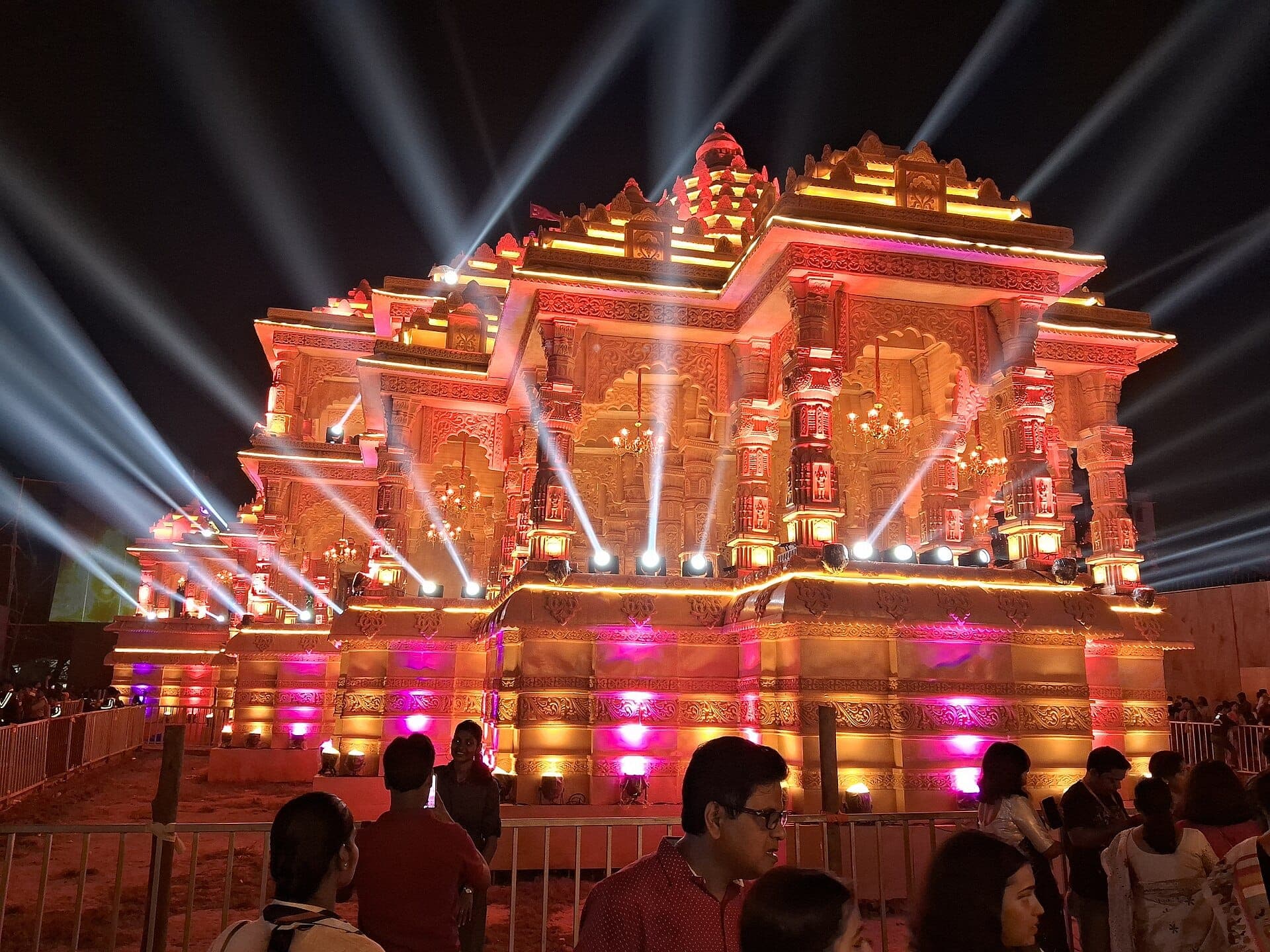
Several thousand temporary buildings, commissioned from named artists, put up in a fortnight and taken down in ten days.
A pandal was originally a bamboo-and-cloth marquee to shelter the idol. Since roughly the 1990s it has become something else: a commissioned installation by a named artist, on a theme, built at enormous scale by a neighbourhood committee that has been fundraising all year.
Themes have included the Bengal famine, migrant labour during the pandemic, the destruction of the East Kolkata Wetlands, terracotta temple architecture, and a working model of a paper mill. Materials run from bamboo and jute to bicycle parts, terracotta pots, sewing machines and tens of thousands of clay tea cups.
The competition is fierce and sponsored. Awards go to the best pandal, the best idol and the best lighting, and winning changes what a committee can raise next year.
All of it is dismantled within about ten days, and nothing is kept. The scale of the annual construction-and-demolition cycle is one of the odder facts about the city, and it is the main reason UNESCO listed the festival in 2021.
- Pandals
- Several thousand across the city
- Built in
- Two to three weeks
- Standing for
- About ten days
- UNESCO
- Inscribed December 2021
III
Chapter III
The Food
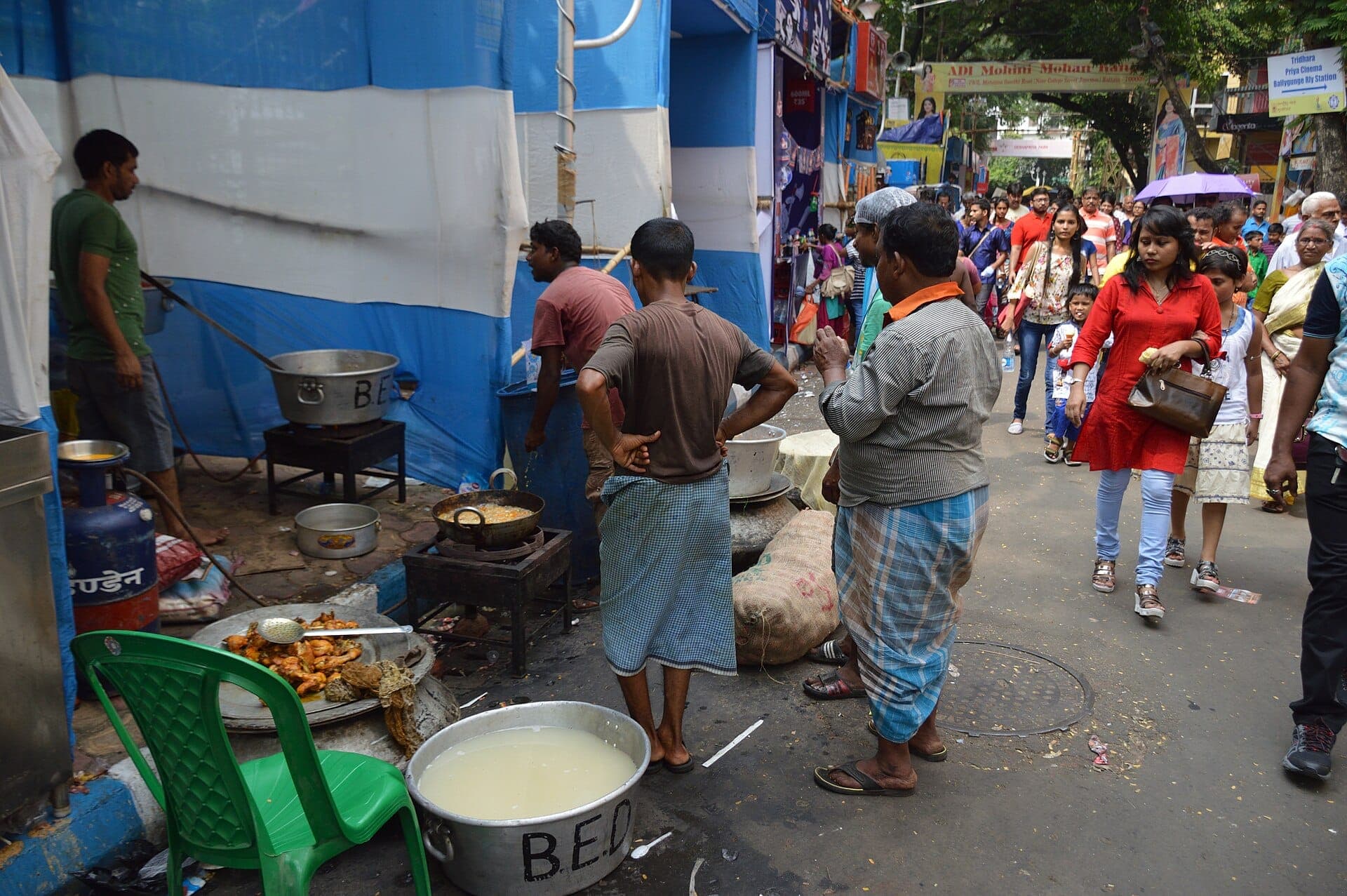
Five days on which nobody cooks at home, nothing opens before noon, and the queues start at four.
Puja food is street food at a scale the street does not normally attempt. Rolls, chow, phuchka, biryani, moglai paratha, ice cream and fish fry, sold from stalls that appear beside every major pandal and vanish a week later.
Navami, the ninth day, is traditionally the biggest meal of the year. Every restaurant in the city is full, every household that is cooking is cooking mutton, and bookings for the good Bengali places go weeks in advance.
Bhog is the other half of it. Many community Pujas serve khichuri, labra, beguni and chutney on a leaf plate to anyone who queues, free, on Ashtami and Navami. It is often better than anything you will pay for.
Dashami ends with mishti: sandesh and rosogolla handed round after sindoor khela, whether or not anyone wants more sugar.
- Biggest meal
- Navami, the ninth day
- Bhog
- Khichuri and labra, free, on a leaf plate
- Book ahead
- Weeks, for any Bengali restaurant
IV
Chapter IV
The Dhaak
ঢাক
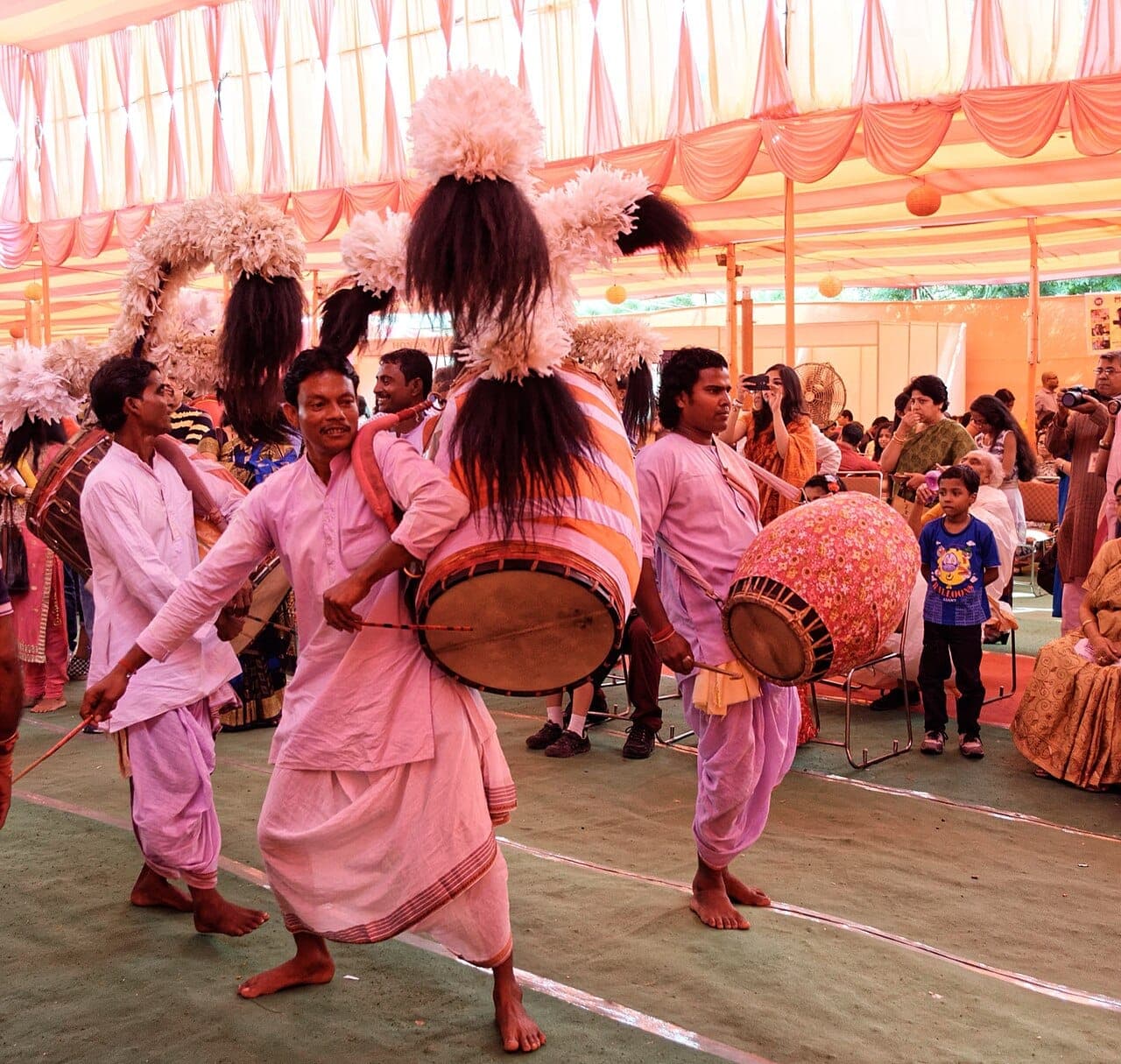
A two-headed drum slung from the shoulder, played with two sticks, and the sound the whole festival runs on.
The dhaak is a large barrel drum, hung from the shoulder on a strap and struck with two thin canes. Dhaakis come into the city from rural Bengal in September, gather at Sealdah and Howrah stations, and are hired for the five days by committees and households.
There is no notation. The patterns are learned by ear, and the good players improvise against each other. A feathered plume is tied to the drum, which serves no acoustic purpose whatsoever.
It is played continuously through the arati, alongside the kanshor ghanta, a bell-metal gong, and the conch. On Ashtami evening the dhunuchi naach, a dance with a burning incense burner held in the hands and sometimes the mouth, is performed to it.
The trade is precarious. Dhaakis are paid for five days a year and farm the rest of it, and the number coming into the city has been falling.
- The drum
- Barrel, two heads, shoulder-slung
- Played with
- Two thin canes
- Hired at
- Sealdah and Howrah, in September
- Also hear
- Kanshor ghanta and the conch
V
Chapter V
The Crowd
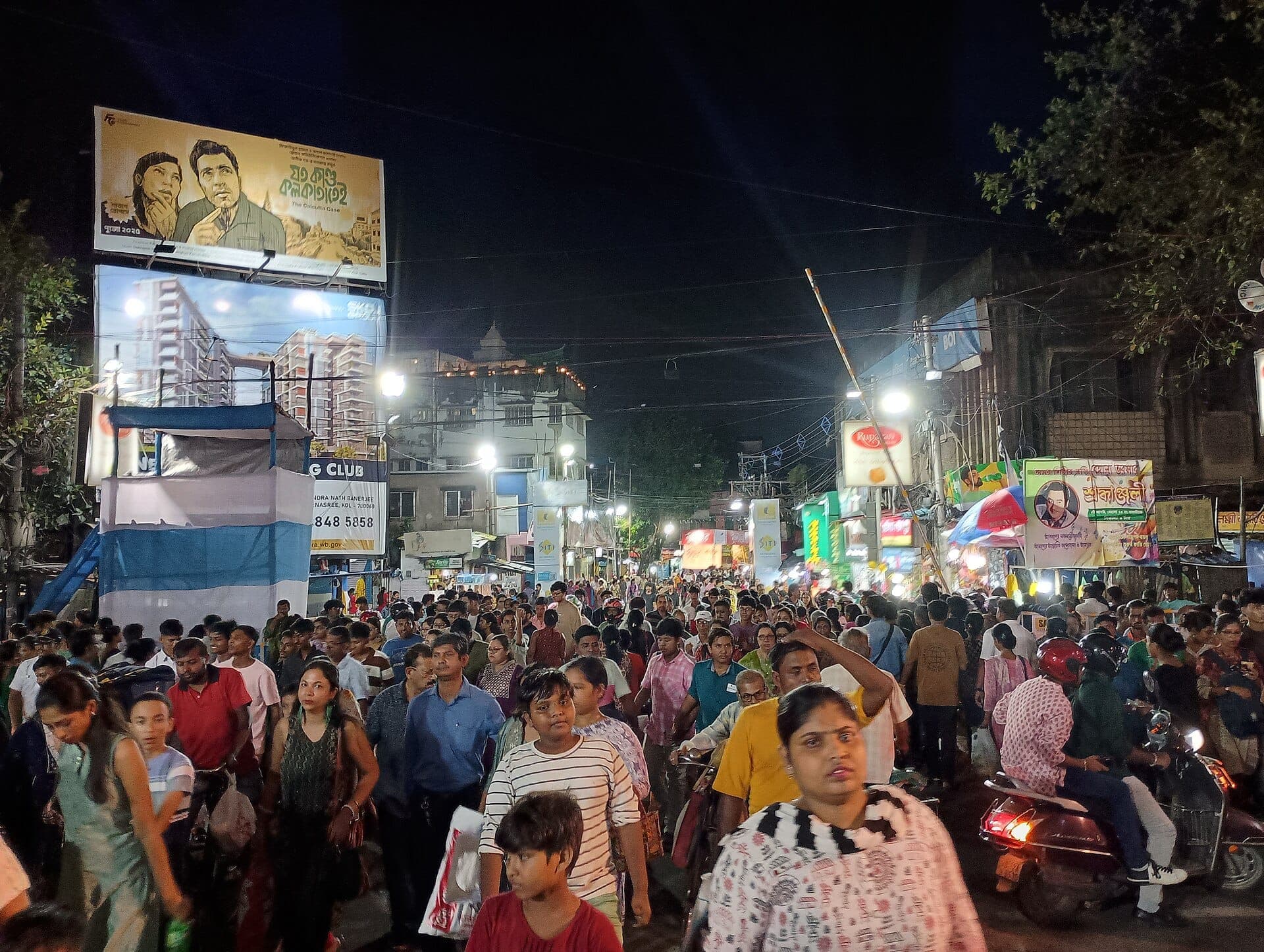
Several million people walking between pandals, all night, for four nights, on roads closed to traffic.
From Shashthi the city inverts. Nothing much happens before four in the afternoon and everything happens between nine at night and four in the morning. Roads close, the metro runs extended hours, and pandal-hopping becomes the only activity.
The queues are the experience. The big south Kolkata pandals can take two hours to enter, in a barricaded line that moves at walking pace, and the line itself becomes sociable.
Photographers work the crowd rather than the idols. The best night photography in India happens in these four nights, on ordinary streets, under lighting rigs built by Chandannagar technicians.
Maddox Square in Ballygunge is the exception that proves the rule: the pandal is unremarkable and the field around it becomes an all-night open-air social event where most of south Kolkata under thirty meets everyone they went to school with.
- Busiest night
- Ashtami
- Queue for a big pandal
- Up to two hours
- Metro
- Extended hours through the five days
- Go instead on
- Panchami or Shashthi
VI
Chapter VI
The Rituals
Mahalaya to Dashami: the invocation, the eyes, the arrival, and the goddess going home to the hills.
Mahalaya, a week before, ends the fortnight of the ancestors and begins the goddess's. Birendra Krishna Bhadra's Mahishasuramardini has been broadcast on the radio at four in the morning on this day since 1931, and the whole state is awake for it. The eyes are painted in Kumartuli on the same morning.
Bodhon on Shashthi wakes and installs her. Saptami begins at dawn with the kola bou snan: a banana plant is bathed in the river and dressed as a bride, a rite almost no visitor ever sees.
Ashtami is the largest day: the pushpanjali in the morning, the sandhi puja at the junction of Ashtami and Navami with 108 lamps and 108 lotuses, and the dhunuchi naach in the evening.
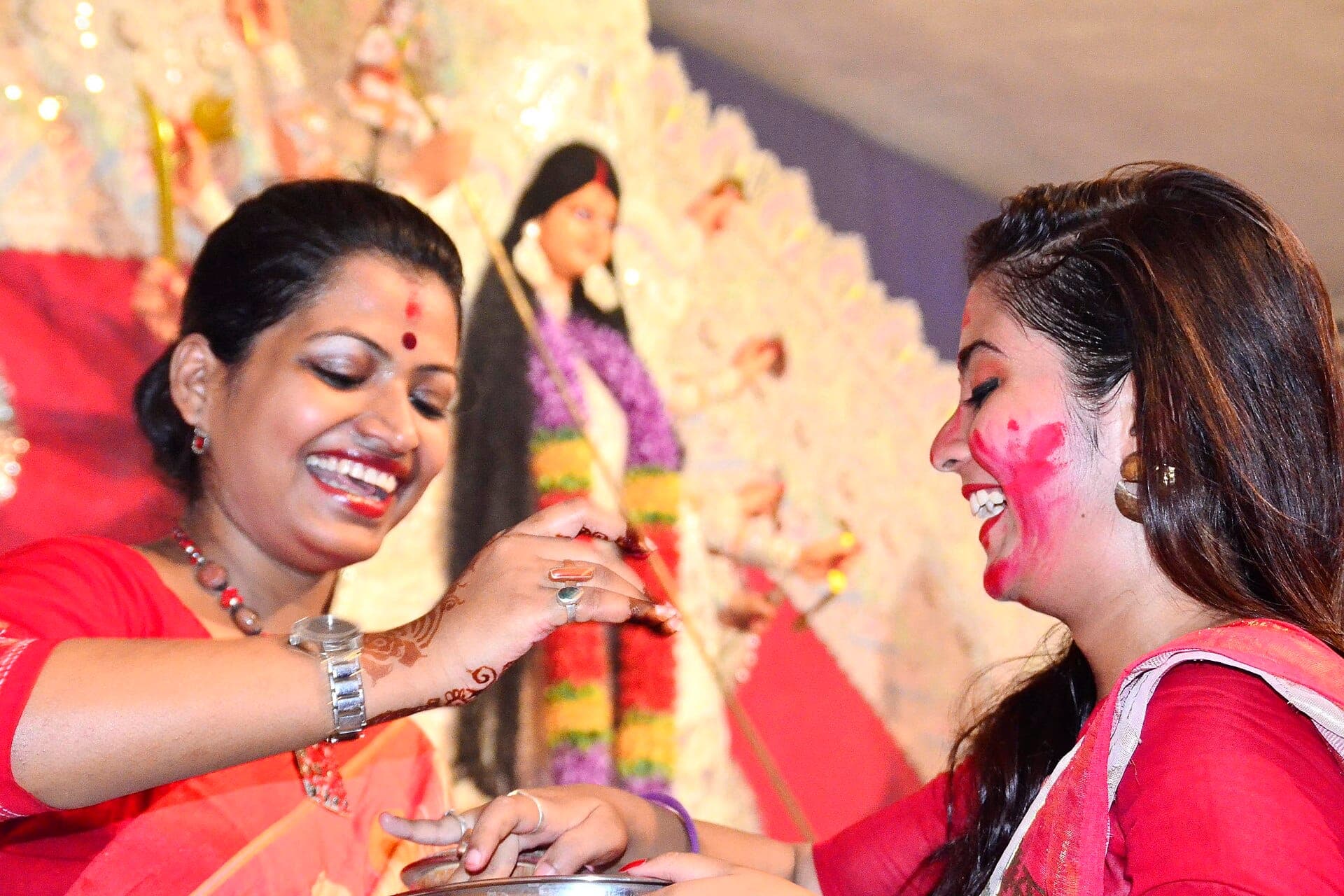
Dashami is the departure. Married women mark each other with vermilion in sindoor khela, the idol is given sweets for the journey, and then she goes to the river.
- Mahalaya broadcast
- 4am, on the radio, since 1931
- Sandhi puja
- 108 lamps, 108 lotuses
- Kola bou snan
- Saptami at dawn, at the ghats
- Sindoor khela
- Dashami afternoon
VII
Chapter VII
The Immersion
On Dashami the clay goes back into the river it came from, and in January somebody starts binding straw again.
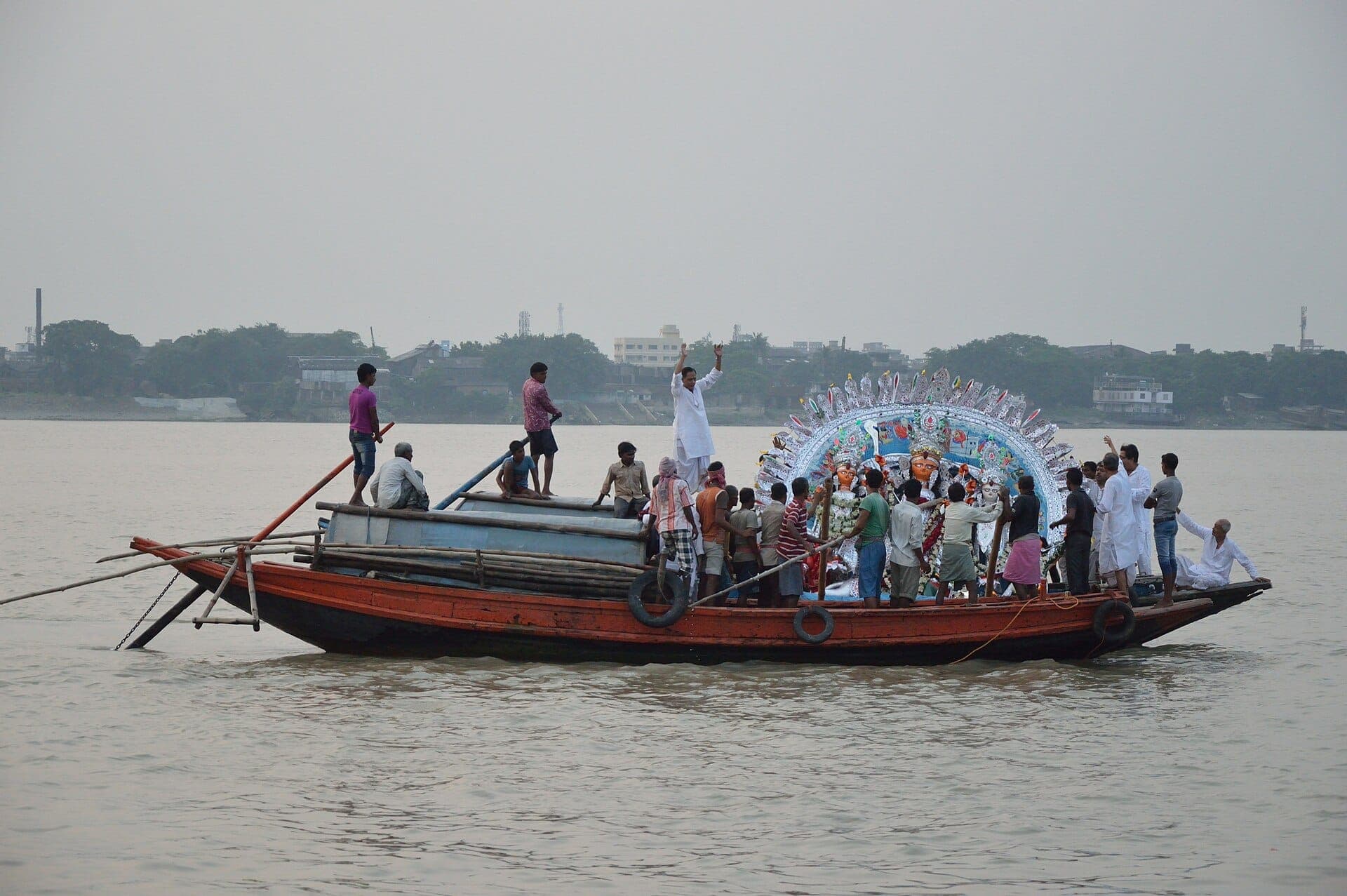
Bisarjan begins in the afternoon and runs deep into the night. Lorries queue along Strand Road; cranes lift the larger figures; the dhaak comes with them. Babughat and Bagbazar Ghat take the largest share.
The environmental rules have tightened. Water-based, lead-free colours are required, and the bamboo and straw frames must be pulled out of the water after immersion rather than left. Compliance is uneven and improving.
Two days later, the prize-winning pujas parade their idols down Red Road in a carnival before their own immersion. It is ticketed and is the only orderly event of the week.
The Kumartuli lanes are silent in November. By January somebody is binding straw again, for a festival eight months away.
- Main ghats
- Babughat, Bagbazar, Ahiritola
- Runs
- Dashami afternoon into the night
- Red Road carnival
- Two days later, ticketed
- Rules
- Water-based colour; frames recovered
The days
Mahalaya to Dashami
The festival moves each year with the lunisolar calendar. What does not move is the shape of it.
Mahalaya
মহালয়া
6 days before
The invocation, broadcast at four in the morning. The eyes are painted in Kumartuli.
A radio, then Kumartuli
Panchami
পঞ্চমী
1 days before
Most pandals open unofficially. The best night to go, because the crowds have not arrived.
North Kolkata
Shashthi
ষষ্ঠী
Day one
Bodhon: the goddess is woken and installed. The city stops going to work.
Bonedi bari courtyards
Saptami
সপ্তমী
Day 2
Kola bou snan at dawn: a banana plant bathed in the river and dressed as a bride.
The ghats, before six
Ashtami
অষ্টমী
Day 3
Pushpanjali, then sandhi puja with 108 lamps, then dhunuchi naach. The busiest night of the year.
Everywhere, impassably
Navami
নবমী
Day 4
The largest meal of the year, and the last full night of pandal-hopping.
A restaurant you booked weeks ago
Dashami
দশমী
Day 5
Sindoor khela, then bisarjan. The idols go to the river.
Babughat and Bagbazar Ghat
Plates
Five nights
If you are coming
Six things nobody tells you
Go on Panchami
Most pandals are open unofficially and the crowds have not arrived. Ashtami is impassable.
Do not book a car
Roads close. The metro runs extended hours and walking is faster than anything with wheels.
Eat the bhog
Khichuri and labra on a leaf plate, free, at most community Pujas. Better than the paid food.
See a bonedi bari
A household Puja in an old family courtyard is a completely different thing from a street pandal.
Get up for Mahalaya
Four in the morning, a week before. The radio broadcast, then the eyes being painted in Kumartuli.
Stay for the carnival
Two days after Dashami, the prize-winning pujas parade down Red Road. Ticketed, and orderly.