Literature

The City of Words

A city that will still buy poetry at scale, which almost no other market anywhere does. Eleven works, the places attached to them, and the excerpts we are allowed to print.

Eras
7
Excerpts
Public domain only
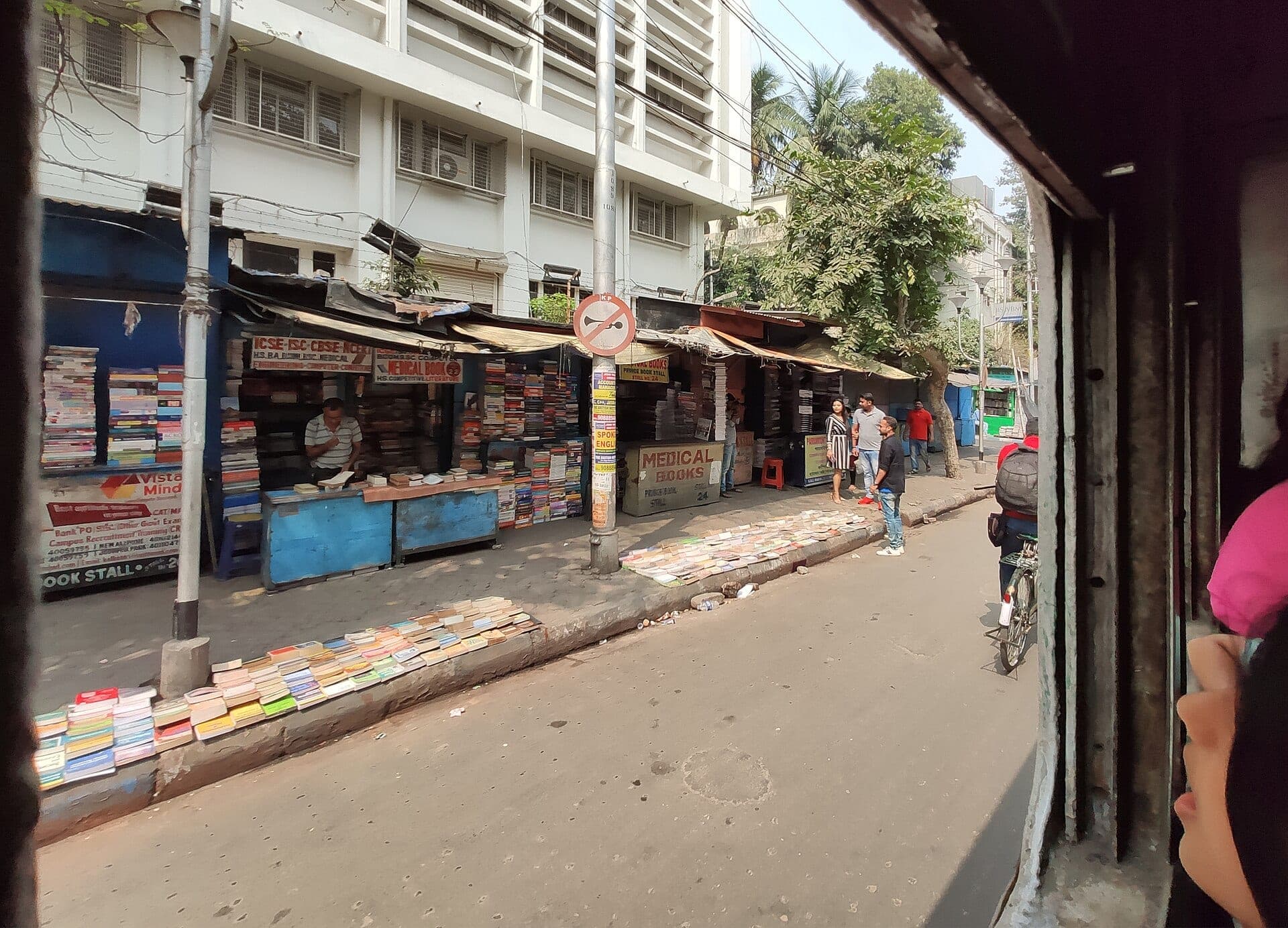
Book stalls on College Street, seen from a tram window
শব্দের শহরTHE CITY OF WORDS

Bengali prose barely existed as a literary register in 1850. By 1913 the language had a Nobel laureate. What happened in between was largely conducted within a mile of College Street, in magazines, in argument, and in print runs of a few hundred.

Note on excerpts: works are in the public domain in India sixty years after the author’s death. Where an author is still in copyright, this page carries a description rather than the text.

Bengal Renaissance

  • Gitanjali

    গীতাঞ্জলি

    1910

    Rabindranath Tagore

    চিত্ত যেথা ভয়শূন্য, উচ্চ যেথা শির

    Where the mind is without fear and the head is held high.

    Tagore translated the collection into English himself, in a plainer register than the Bengali, and it won the Nobel in 1913. The English versions made him internationally famous and are not the work a Bengali reader means.

  • Anandamath

    আনন্দমঠ

    1882

    Bankim Chandra Chattopadhyay

    বন্দে মাতরম্

    Vande Mataram. I bow to thee, Mother.

    A novel about the sannyasi rebellion during the Bengal famine of 1770, containing the song that the Swadeshi movement adopted after 1905 and that became India's national song in 1950. The novel's politics are considerably more complicated than the song's later use.

  • Meghnad Badh Kavya

    মেঘনাদবধ কাব্য

    1861

    Michael Madhusudan Dutt

    Stop a while, traveller, if Mother Bengal claims thee for her son.

    Bengali blank verse did not exist until this poem. Dutt retold the Ramayana with Ravana's son as the tragic hero, which was a deliberate provocation and is still argued about. The line quoted is from his own epitaph.

Reform

  • Sultana's Dream

    1905

    Begum Rokeya

    We have no hand or voice in the management of our social affairs. In India man is lord and master.

    A feminist science-fiction utopia written in English, in which men are kept in seclusion because they cannot be trusted with public life, and solar power has abolished drudgery. It predates most of the Western feminist utopian canon.

Early twentieth century

  • Devdas

    দেবদাস

    1917

    Sarat Chandra Chattopadhyay

    If you ever suffer, if a doctor cannot be found, do not forget me.

    Written in 1900 when he was twenty-four and shelved for seventeen years. Filmed at least twenty times in a dozen languages, which makes it probably the most adapted Indian novel there is.

Nationalist period

  • Pather Dabi

    পথের দাবী

    1926

    Sarat Chandra Chattopadhyay

    Still in copyright. Described rather than quoted.

    A novel about a revolutionary organisation, banned by the government of Bengal in 1927. Tagore had reservations about the book and argued publicly against the ban anyway.

  • Bidrohi

    বিদ্রোহী

    1922

    Kazi Nazrul Islam

    Still in copyright. Described rather than quoted.

    The Rebel. Published in the weekly Bijli, and it made Nazrul a national figure at twenty-three. He was jailed the following year for sedition and went on hunger strike; Tagore dedicated a play to him. Still in copyright, so the text is not reproduced here.

Bengali modernism

  • Banalata Sen

    বনলতা সেন

    1942

    Jibanananda Das

    হাজার বছর ধরে আমি পথ হাঁটিতেছি পৃথিবীর পথে

    For a thousand years I have walked the paths of this earth.

    Sixteen lines, and probably the most quoted poem in modern Bengali. He published almost nothing in his lifetime and left thousands of poems in notebooks nobody opened until after he died.

  • Rupasi Bangla

    রূপসী বাংলা

    Written 1934, published 1957

    Jibanananda Das

    বাংলার মুখ আমি দেখিয়াছি

    I have seen the face of Bengal, and so I seek no beauty of the earth any more.

    Written in 1934 and found in a notebook after his death. It is the book that made him, twenty-three years after he wrote it and three years after he was killed by a tram.

The Naxalite years

  • Hajar Churashir Maa

    হাজার চুরাশির মা

    1974

    Mahasweta Devi

    Still in copyright. Described rather than quoted.

    Mother of 1084. A Kolkata mother learns her son has been killed as a Naxalite and spends a day discovering who he was. Mahasweta Devi is still in copyright, so this is a description rather than an excerpt.

Modern

  • Sei Samay

    সেই সময়

    1981–82

    Sunil Gangopadhyay

    Still in copyright. Described rather than quoted.

    Those Days. A novel of nineteenth-century Calcutta with Vidyasagar, Madhusudan Dutt and the Young Bengal set moving through it. In copyright; described rather than quoted.

Where the trade is

A mile and a half of secondhand stalls

College Street