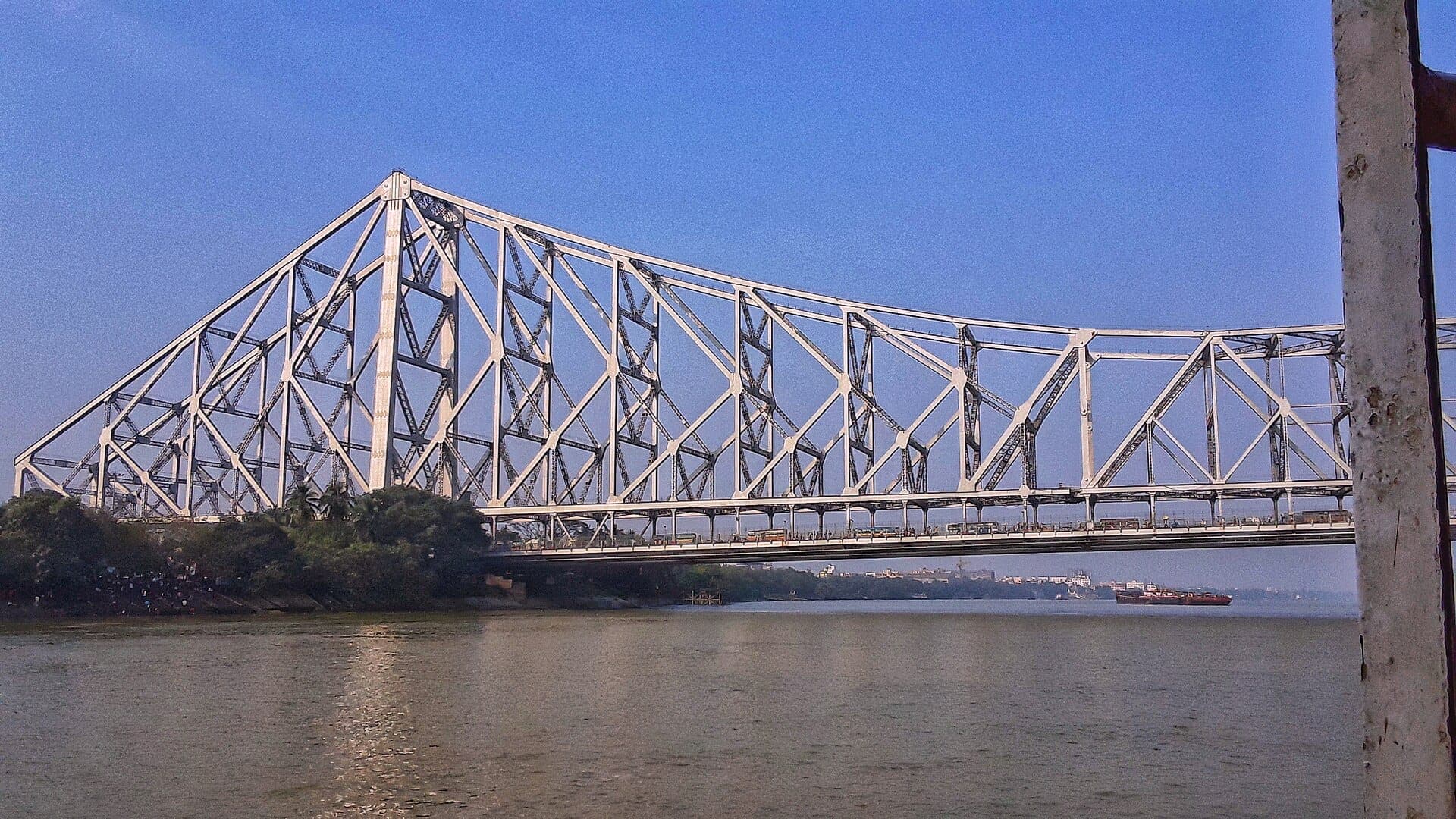
It was meant to be temporary. The pontoon bridge it replaced had been swinging open for river traffic since 1874, and by the 1920s the crossing was a daily humiliation of stalled carts and shouting. A commission sat, argued, and eventually specified a cantilever so that no pier would stand in the shipping channel.
The bridge is riveted, not bolted. Roughly 26,500 tonnes of steel, most of it Tata's, was fastened together with hot rivets driven by hand, which is why the structure appears to have been knitted rather than assembled. It hangs from two 82-metre towers and touches the water nowhere in between.
War delayed it. It opened quietly in February 1943 with no ceremony at all, because a lit ribbon-cutting on the Hooghly during a Japanese bombing campaign seemed unwise. The first thing across was a single tram.
What it carries now is the point. Cars and buses matter less than the river of people who walk it, and the pavement has been worn into shallow troughs by a century of feet. The bird droppings are a genuine engineering problem: the guano is acidic enough that the hangers have needed replacing.
What the guidebook leaves out
Photographing it from the bridge deck is restricted. Everyone shoots it from Mullick Ghat flower market instead, at first light, which is the better frame anyway.