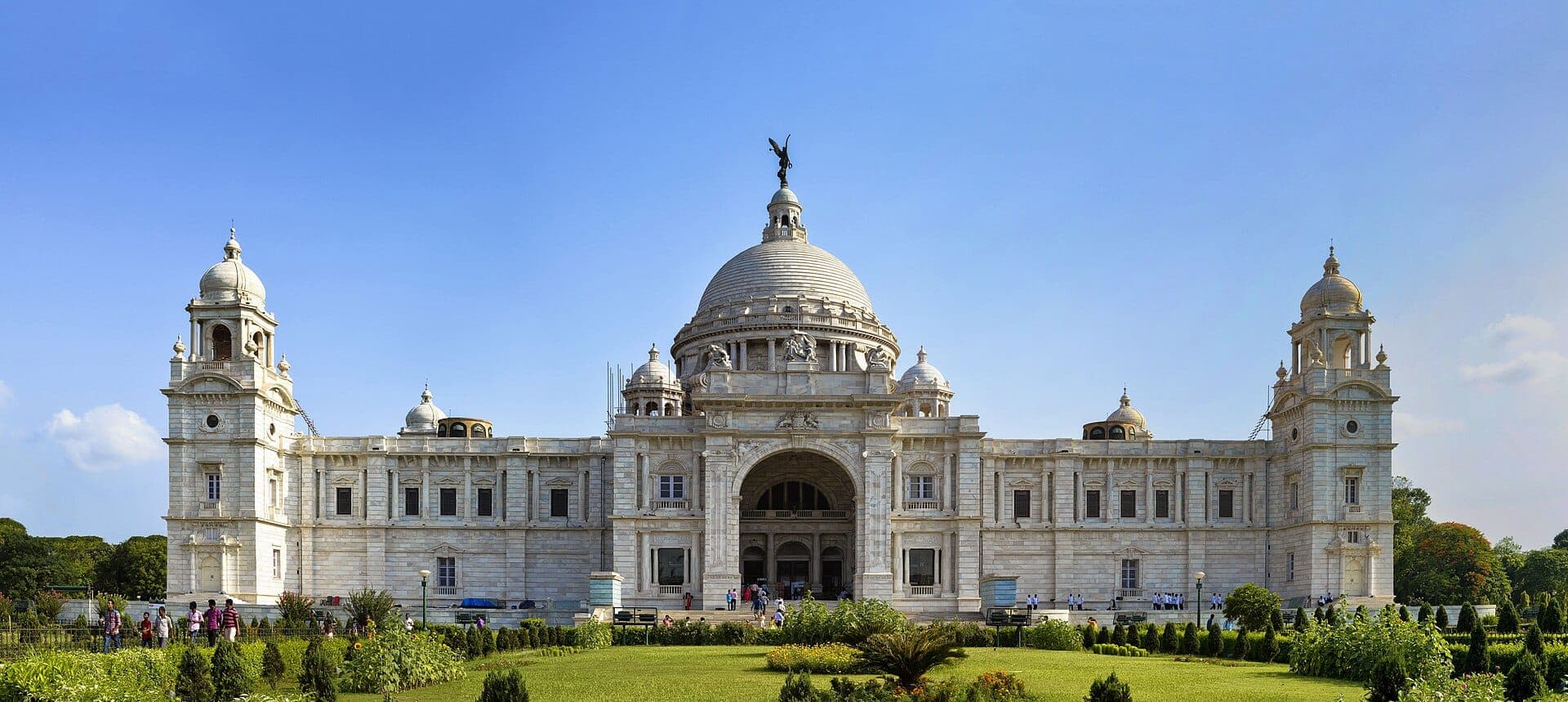
Lord Curzon proposed it within days of Victoria's death in 1901: a building to hold the memory of the Raj at the moment the Raj was most certain of itself. Public subscription paid for much of it. Fifteen years later, when it finally opened, the capital had already moved to Delhi and the certainty had gone.
Emerson worked in the same Makrana marble as the Taj Mahal and borrowed the same central dome logic, then attached Venetian, Egyptian and Mughal detail until the result belonged to no tradition in particular. The bronze Angel of Victory on top is nearly five metres tall and turns on ball bearings in a strong wind.
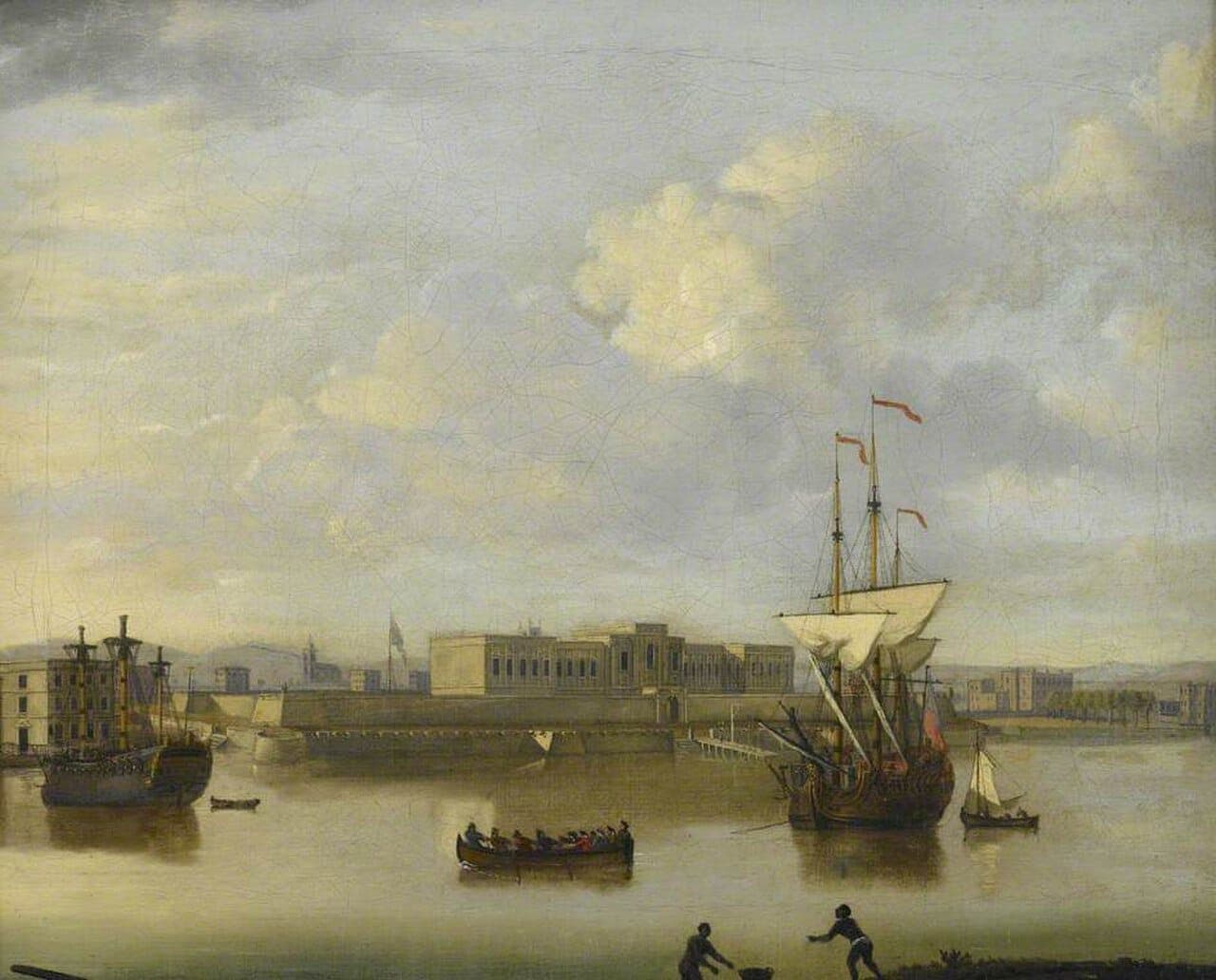
Inside are twenty-five galleries, including a Kolkata gallery that is far better than visitors expect, holding city plans, Kalighat paintings and the sort of Company School watercolours that show what the Strand looked like before the concrete.
The grounds are the real institution. Sixty-four acres of the Maidan, and on any winter evening they hold couples under umbrellas, joggers, cricket, and the horse carriages that wait along Queens Way with their manes dyed pink.
What the guidebook leaves out
The sound-and-light show is skippable. The Kolkata gallery on the ground floor is not, and it is where you should spend the hour instead.