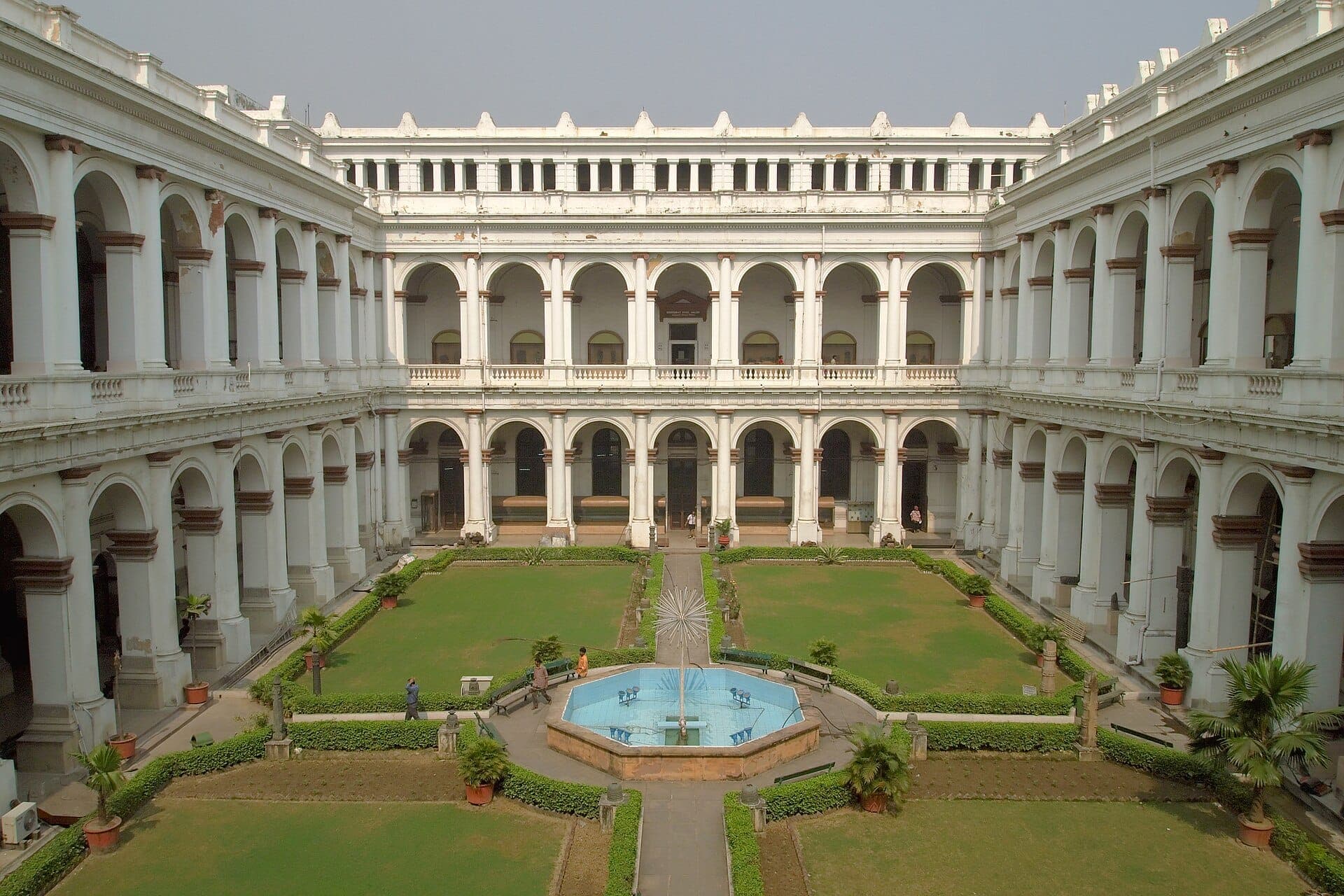
It began as the Asiatic Society's cabinet in 1814, under the Danish botanist Nathaniel Wallich, and grew into something enormous. The current building on Chowringhee dates from 1875 and is arranged around a colonnaded quadrangle that is cooler than the street by several degrees.
The single most important object is the Bharhut gallery: the railing and gateway of a second-century BCE Buddhist stupa from Madhya Pradesh, reassembled here. It is one of the earliest surviving bodies of Indian narrative sculpture, and it is displayed with an understatement bordering on neglect.
The mummy is the other pole of the museum. Locals call the whole building Jadughar, the house of magic, and for most people who grew up in the city the phrase means specifically the room with the mummy in it.
Sixty galleries across six sections. You cannot do it in an afternoon and should not try.
What the guidebook leaves out
The geology section holds one of the largest meteorite collections in the country. Almost nobody walks up there.