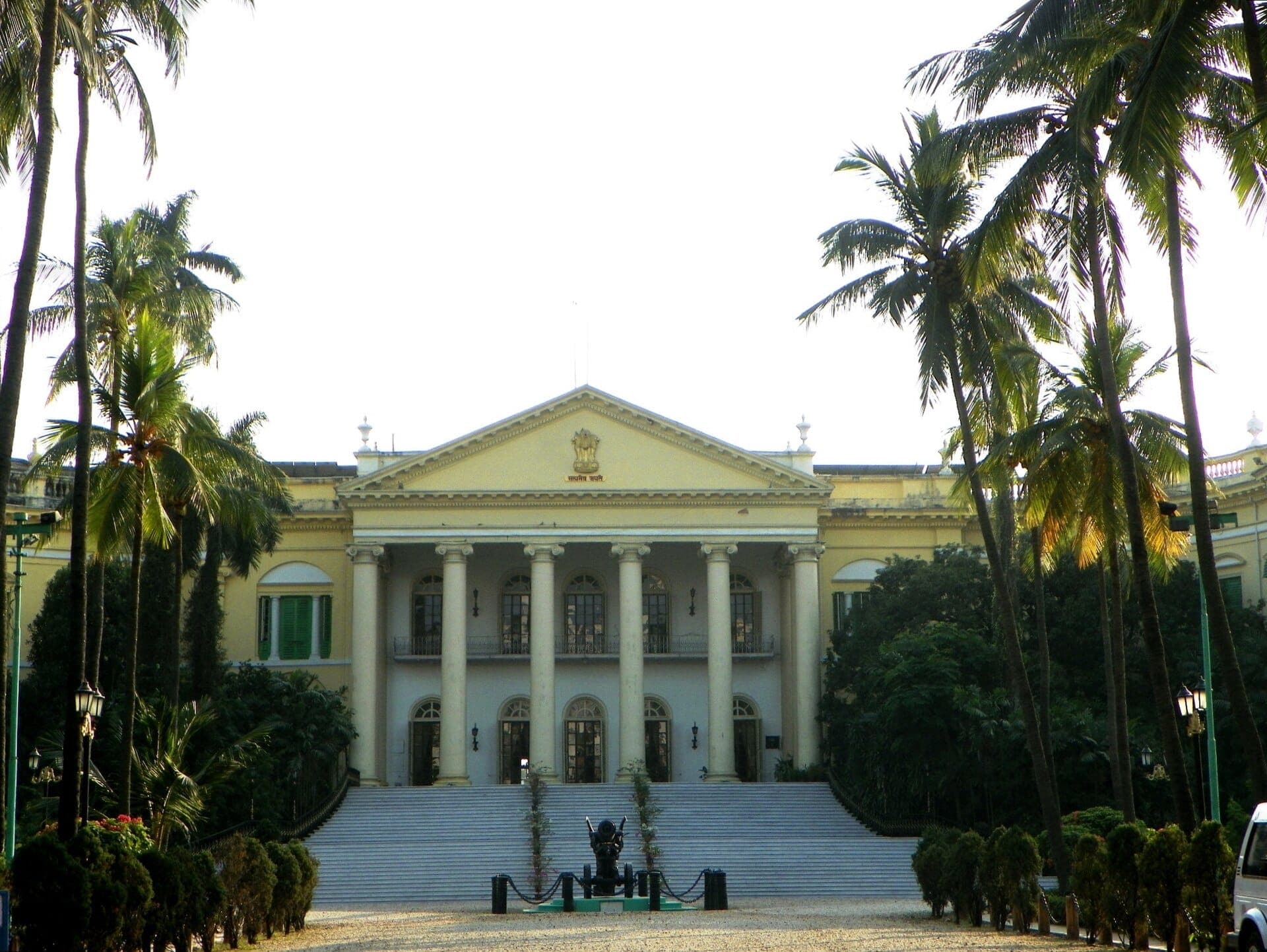
Richard Wellesley arrived as Governor-General in 1798 and decided the Company's representative should be housed like a sovereign. He commissioned Charles Wyatt, an engineer, to build a palace on the plan of Kedleston Hall in Derbyshire: a central block with four curved corridors leading to four wings.
It cost about thirteen lakh rupees against a sanctioned two, and the Company recalled Wellesley partly over it. He is said to have remarked that India should be governed from a palace, not a counting house.
It was the residence of the Governor-General of India until 1912 and then of the Governor of Bengal, and it is now the Governor of West Bengal's residence. Six of the seven Viceroys before the move to Delhi lived here.
The grounds hold Tipu Sultan's captured cannon and a set of Chinese cannon from the Opium Wars. The building is closed to the public and visible from the Maidan and Esplanade Row.
What the guidebook leaves out
The lions on the north gate hold globes rather than the usual orbs, which was Wellesley's idea of subtlety about what the building was for.