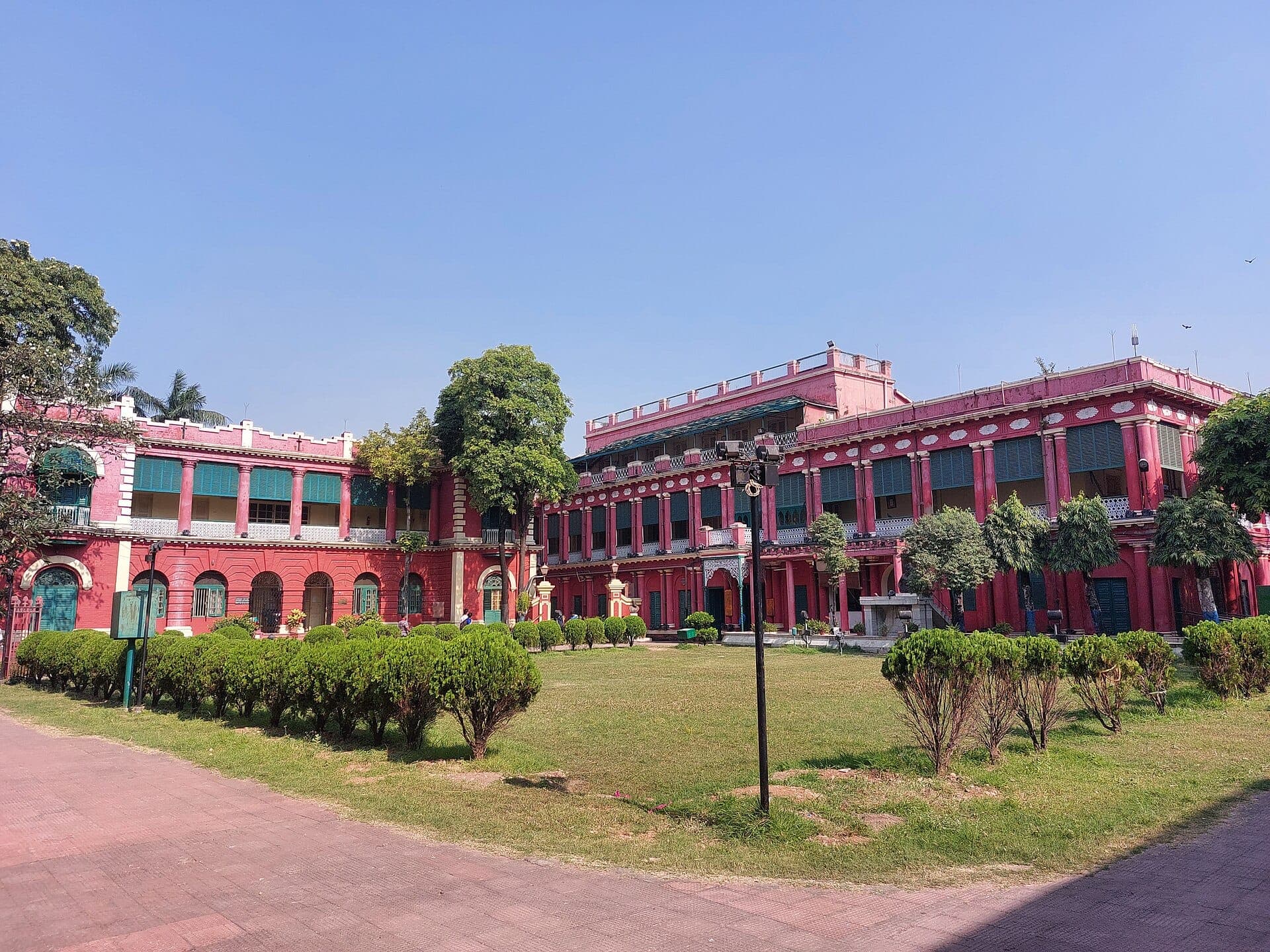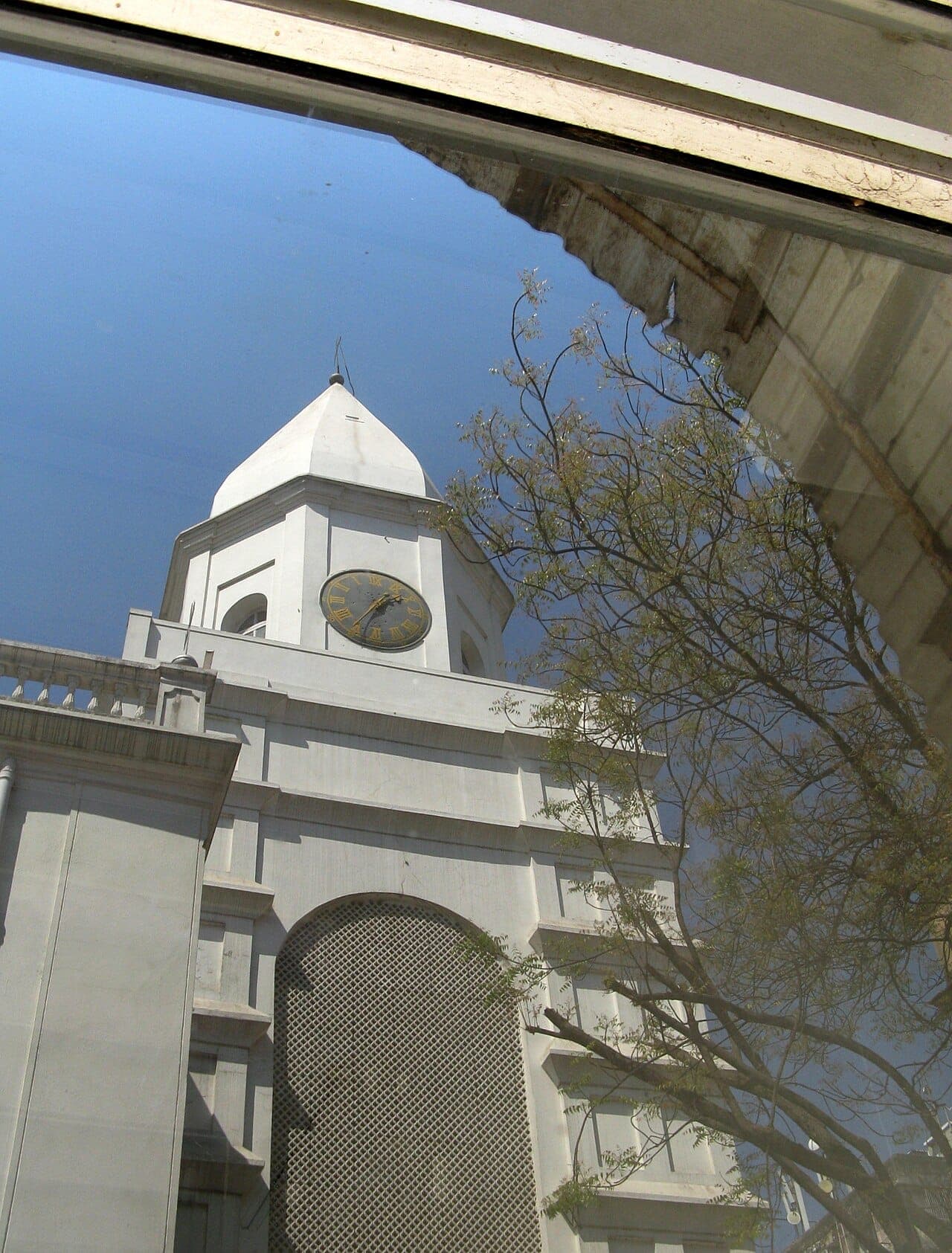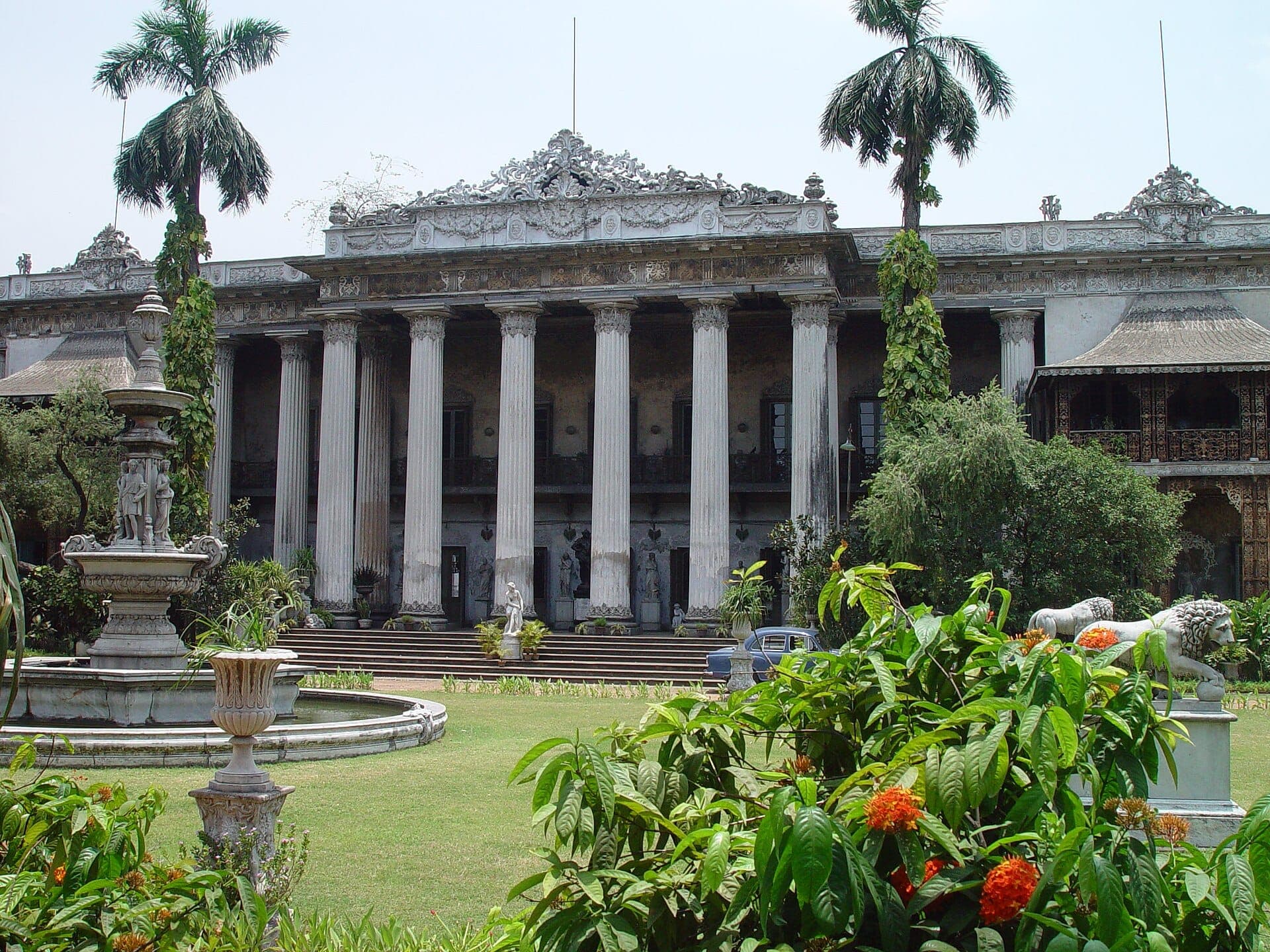
Rajendra Mullick was sixteen when he began building it and wealthy enough that no one stopped him. The result is a neoclassical house wrapped around a traditional Bengali thakur dalan courtyard, floored in 126 varieties of marble, and filled to the ceiling with whatever the nineteenth-century art market would sell to Calcutta.
Some of it is extraordinary. There are two canvases attributed to Rubens, a Reynolds, Murillos, and the largest collection of Victorian statuary in a private Indian house. Some of it is magnificently not extraordinary, and the two hang side by side with no hierarchy at all.
There is no electric lighting in the galleries. Rooms are lit through the courtyard, so the paintings appear and disappear depending on the hour and the cloud. Peacocks walk the garden. A small menagerie has been kept on the grounds since the 1850s.
The family still occupies part of the house. This is why the visit feels less like a museum and more like being shown around by someone who has other things to do.
What the guidebook leaves out
Get the permit a day ahead. Guides at the gate will offer to sort it for a fee; the office does it for nothing.