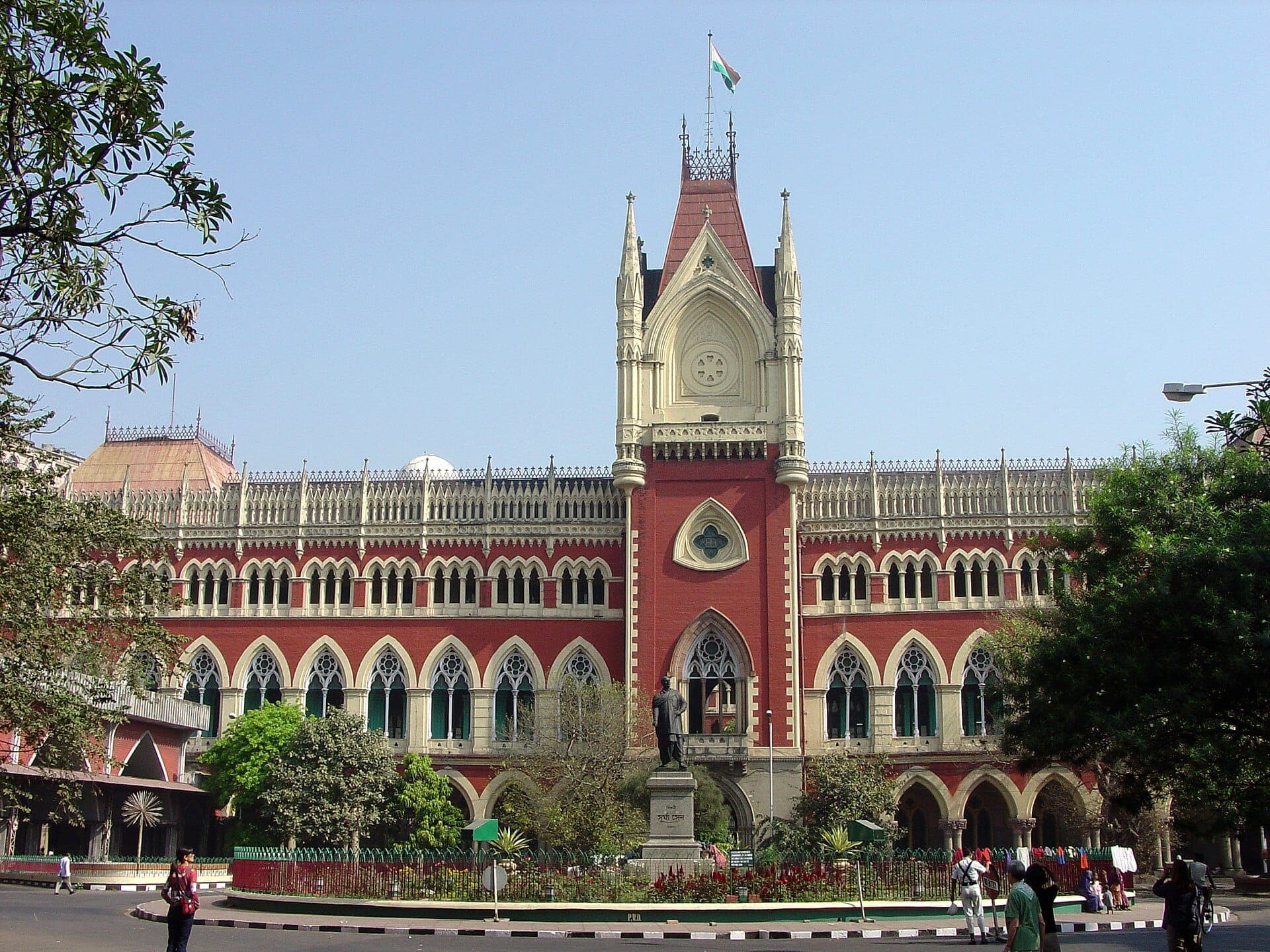
Established in 1862 as the High Court of Judicature at Fort William, it is the oldest of India's high courts, predating Bombay and Madras by a few months. Its jurisdiction once ran from Assam to Burma.
Granville modelled the building on the Lakenhal, the thirteenth-century Cloth Hall at Ypres, which is an unusual choice for a courthouse and produces an unusually good one: a long arcaded facade, a central tower, and a great deal of red brick and pale dressing.
The Ypres original was destroyed by shellfire in the First World War and later rebuilt, which means that for a period the Calcutta copy was the better surviving example of the design.
It is a working court, and the corridors are full of black-gowned advocates, typists at portable tables and enormous bundles of paper tied with red tape, which is where the phrase comes from.
What the guidebook leaves out
The typists. Rows of them at folding tables outside, still producing affidavits on manual machines, because the court's forms have never stopped requiring them.