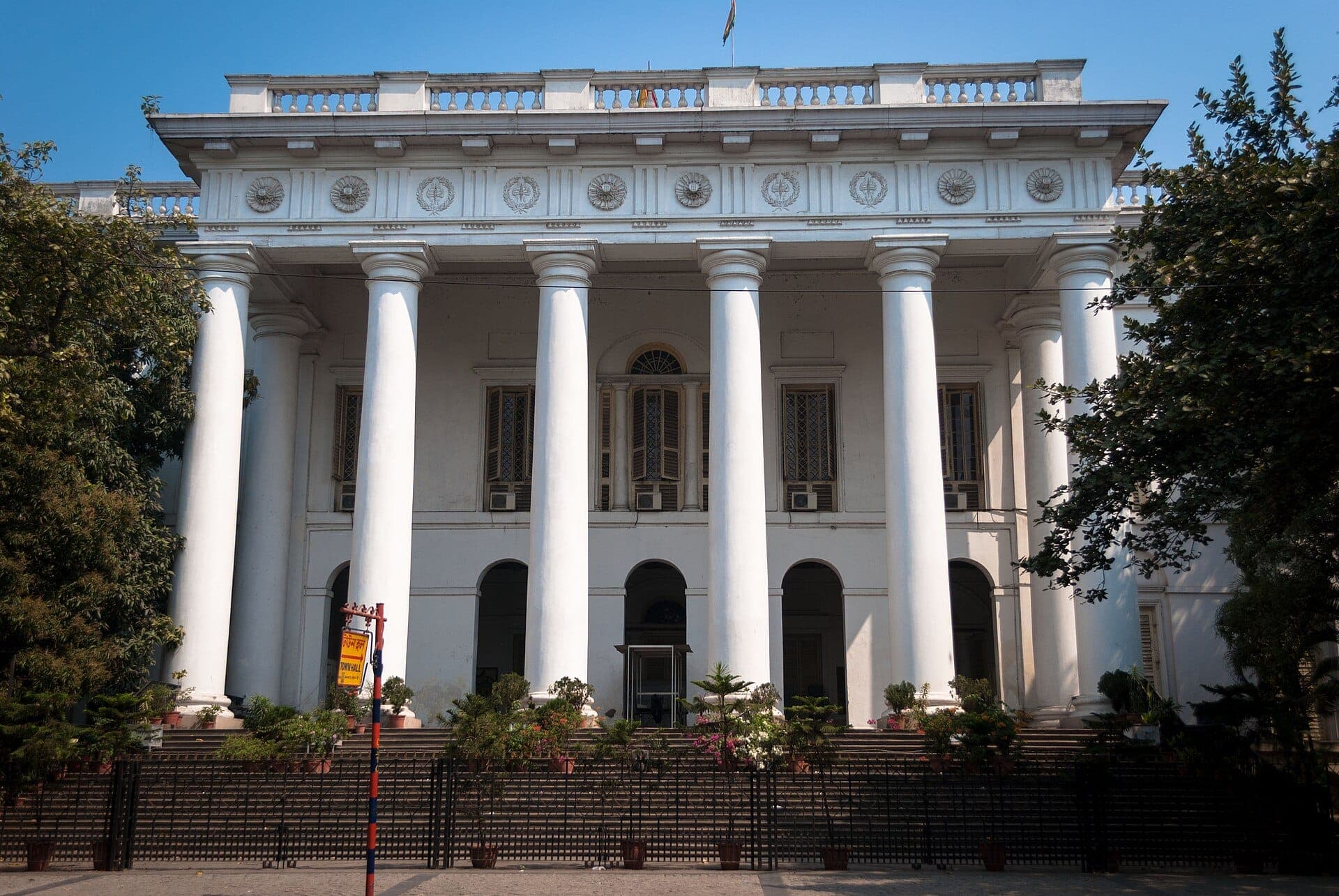
The Town Hall was funded by a public lottery, which was how a surprising amount of early nineteenth-century Calcutta was built, and completed in 1813 to Colonel Garstin's Roman Doric design. It was meant as a meeting place for the European community and became the city's principal public room.
In November 1895, in the main hall, Jagadish Chandra Bose transmitted a millimetre-wave radio signal through two walls and the body of the Lieutenant-Governor to ring a bell and detonate a small charge in another room. This was a year before Marconi's public demonstration on Salisbury Plain, and Bose declined to patent any of it.
The building fell into serious disrepair and was restored in the 1990s. It now houses a Kolkata history museum with dioramas, a collection of statuary rescued from other sites, and an archive.
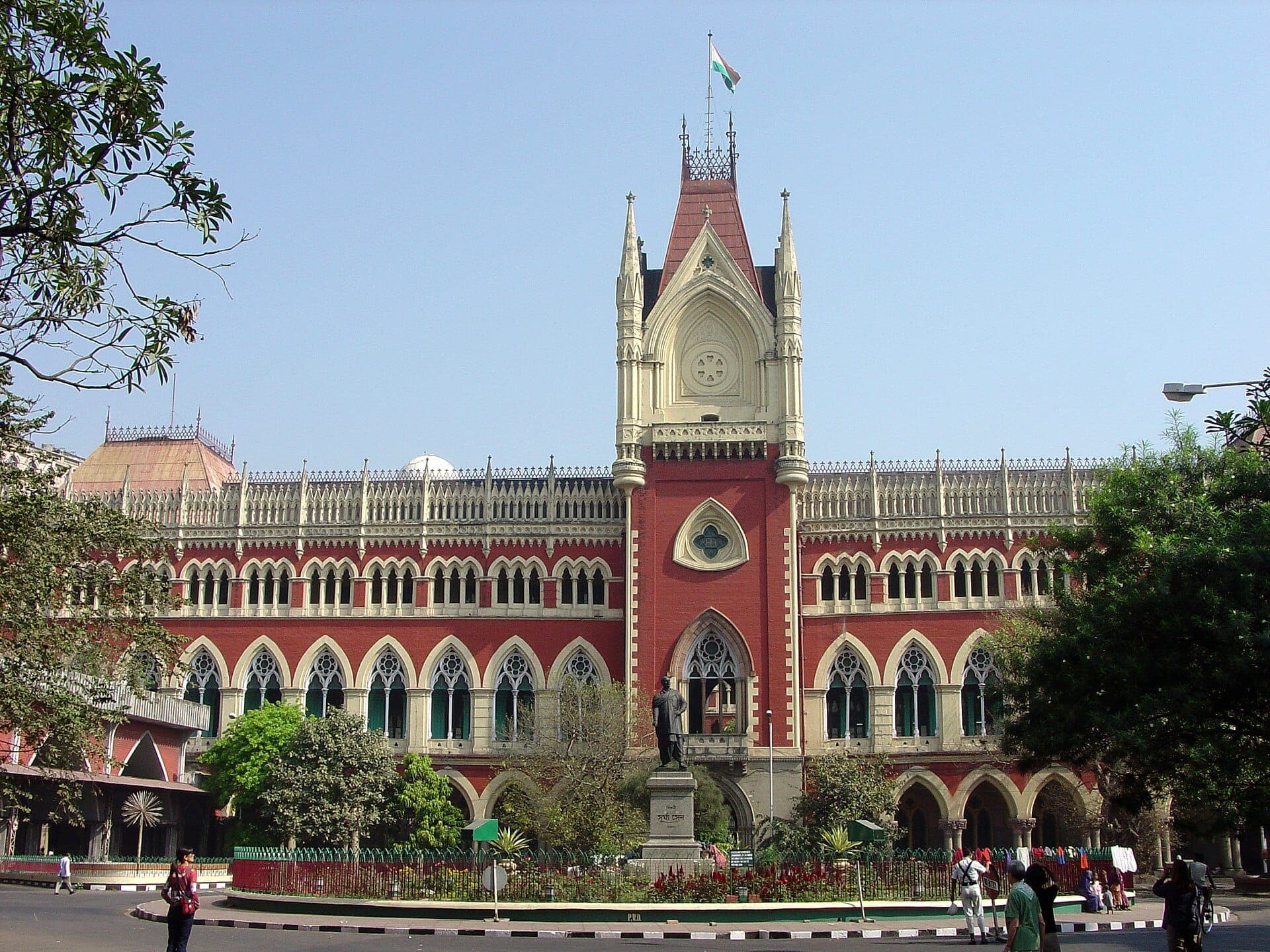
It sits directly opposite the Maidan and next to the High Court, which makes the trio of Town Hall, High Court and Raj Bhavan the densest few hundred metres of Company-era public building anywhere.
What the guidebook leaves out
The basement holds statues removed from public sites after independence, including several viceroys nobody wanted on a plinth any more.