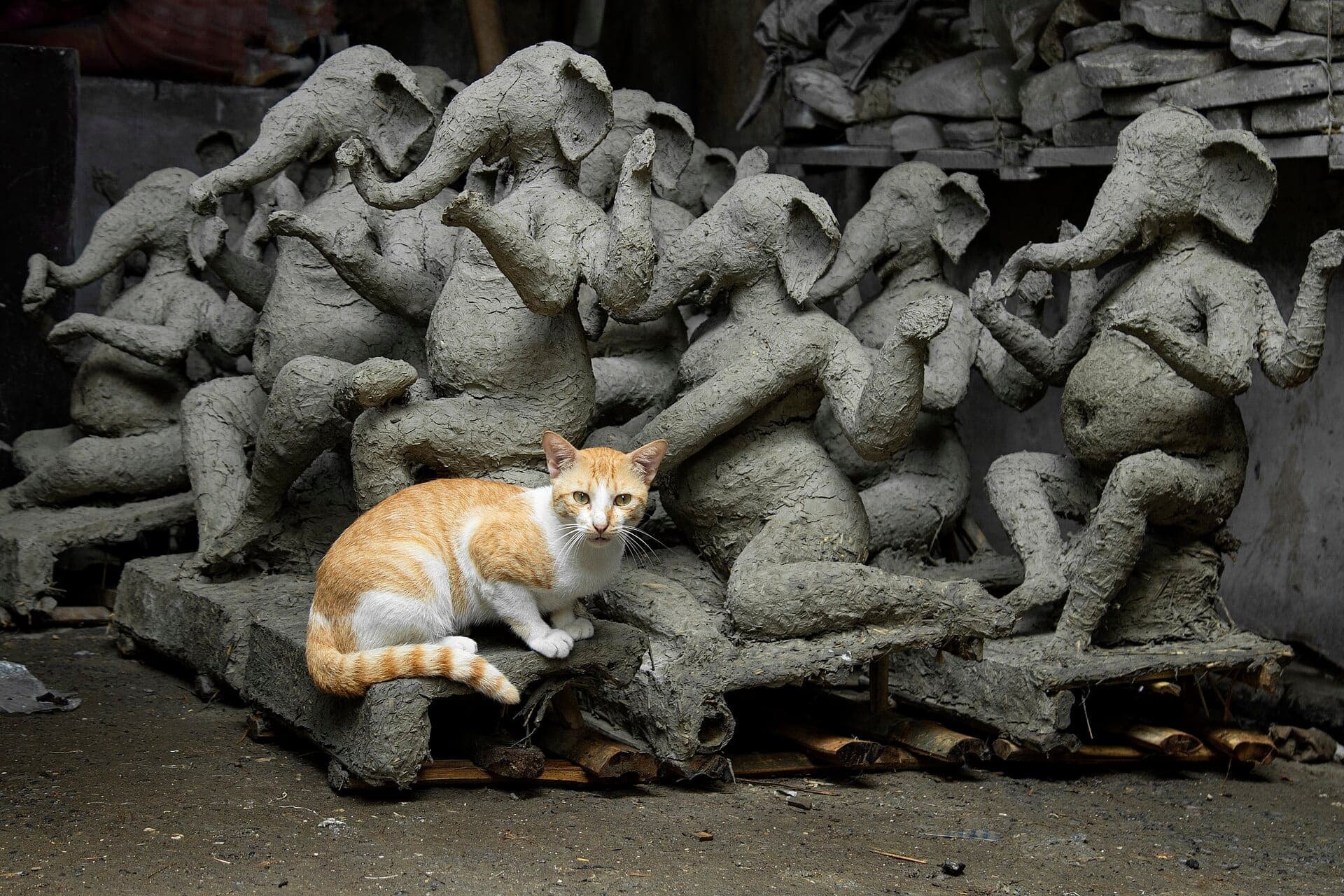
The armature goes up first. Bamboo for the frame, then rice straw bound with jute rope into the rough mass of a body, and this is done fast and roughly by people who are not the ones you will read about. It looks like nothing. It looks like a scarecrow with too many arms.
Then the clay. Two grades: entel mati, a heavy clay from the riverbed, packed on first, and then bele mati, a finer sandy clay mixed with rice husk, laid over it for the surface. Between the two coats the figure is left to dry, and in a wet September that is the thing that goes wrong.
The earth from Sonagachi
Tradition holds that the clay must include punya mati, a handful of earth taken from outside a brothel in Sonagachi. The usual explanation is that a man leaves his virtue at that threshold, so the soil there holds it and the goddess should be made partly of it.
Sex workers' collectives in the neighbourhood have pointed out, at some length, that a city willing to build its goddess from their doorstep is less willing to let their children into its schools. The custom continues. So does the argument, which is the more interesting of the two.
Chokkhu daan
The eyes are painted last, on Mahalaya, the day the fortnight of the ancestors ends and the goddess is invoked. The artisan fasts. Three strokes for each eye and a third eye on the forehead, done in one sitting, and the sequence matters: the pupils go in last.
Before this the figure is a figure. After it, it is the goddess, and it is treated differently by everyone in the room. This is not a metaphor about art. It is a procedural fact of the workshop, and you can see the change in how people move around it.
The economics nobody puts on the poster
A mid-sized idol takes four to six weeks and sells for somewhere between forty thousand and two lakh rupees. Large commissions for major pandals go far higher. Almost all of that arrives in a two-month window, and the workshops carry the other ten months on credit.
The lanes flood. Clay prices rise every year as riverbank extraction is restricted. Younger family members leave for salaried work, and the number of workshops has been broadly flat for two decades while the number of pujas has grown, which means the surviving studios take on more than they can comfortably finish.
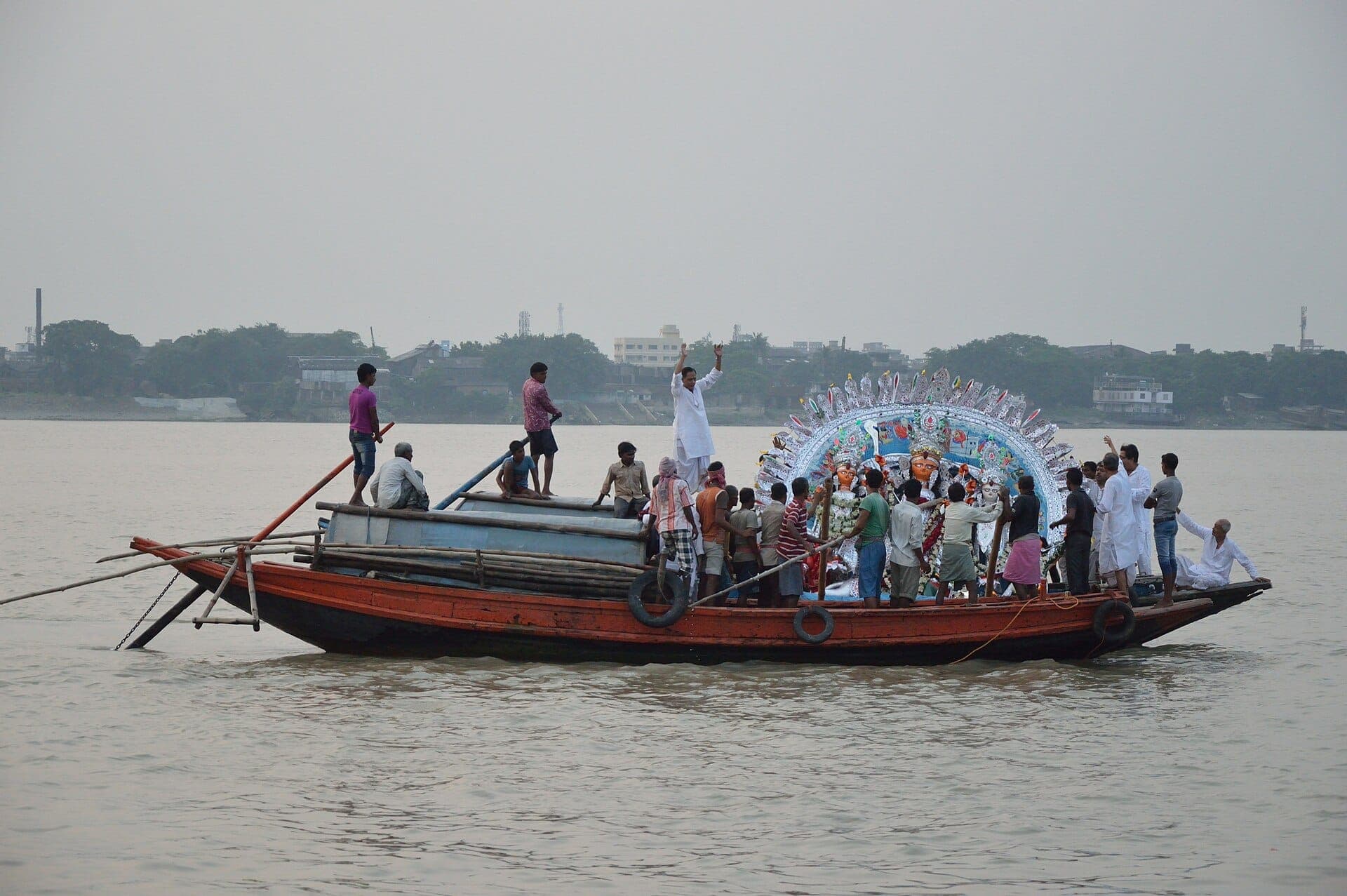
Then, in December, boats take them out into the Hooghly and the clay goes back into the river it came from, and in January someone starts binding straw again.
“We do not make her. We finish her, and she leaves.”