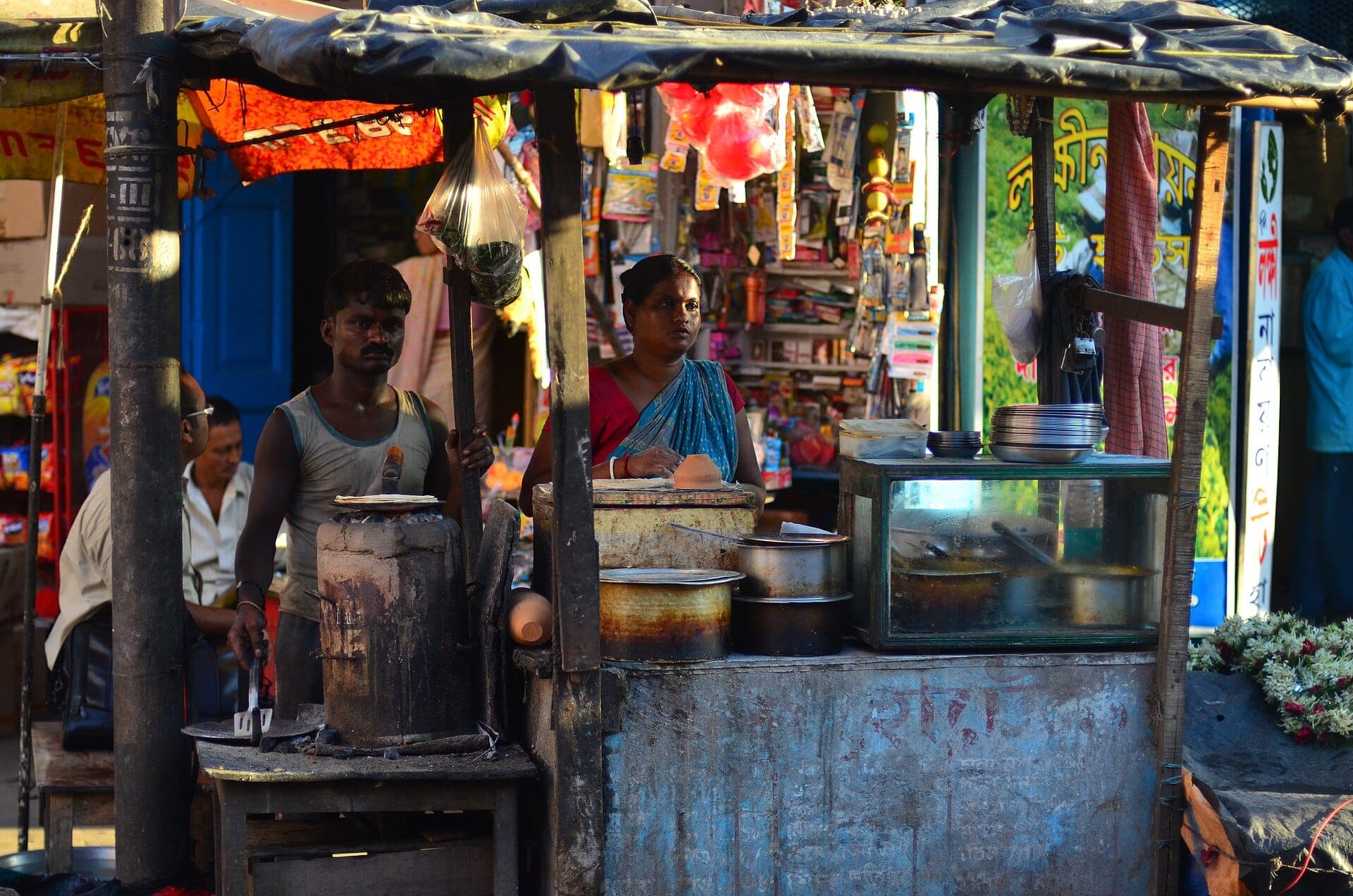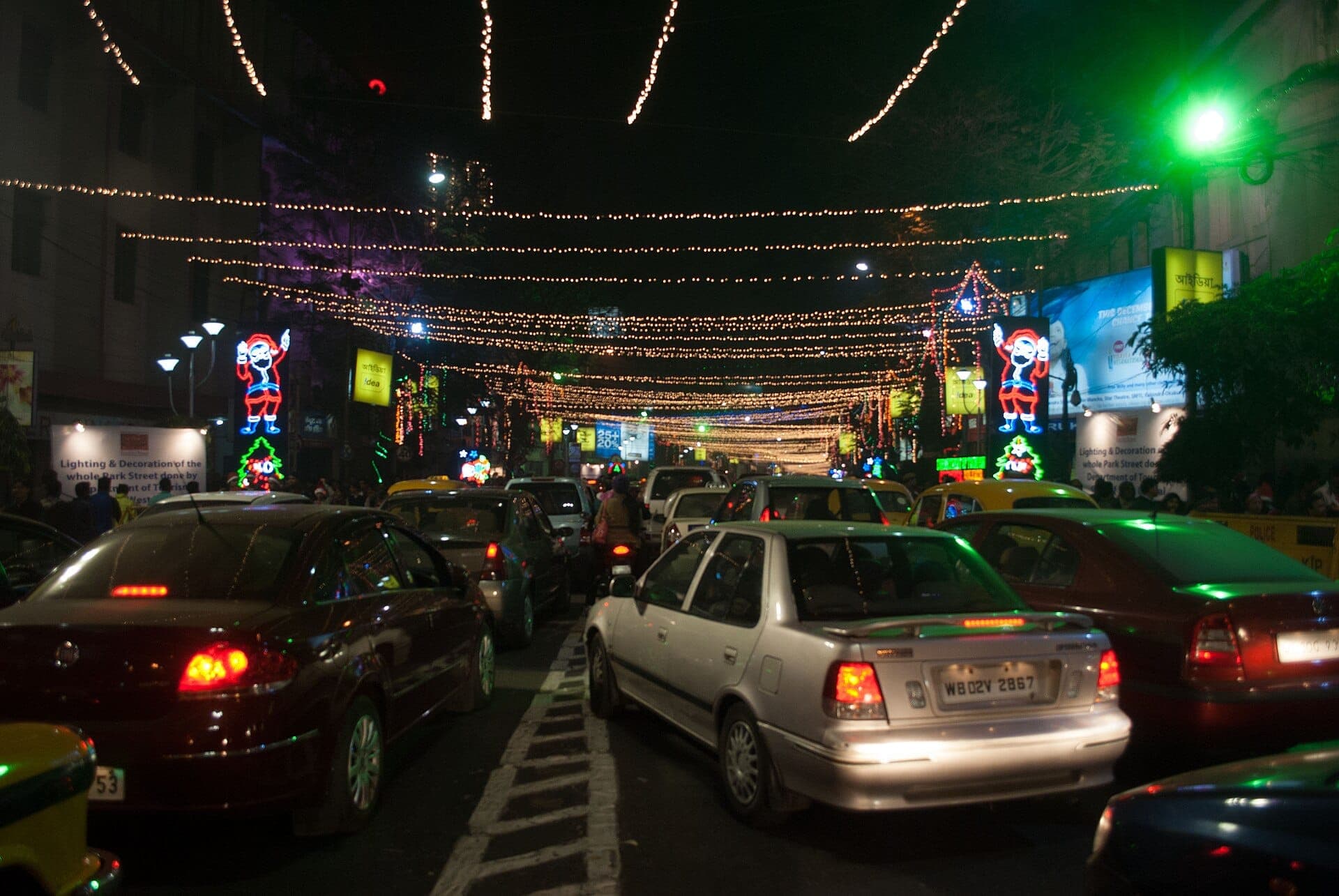
The low-pressure sodium lamp emits at 589 nanometres and almost nowhere else. It is monochromatic. Under it, colour does not exist: a red car and a green car are the same car, and skin, brick, water and rust are all the same shade of amber.
It was installed everywhere because it is absurdly efficient at converting electricity into visible photons, and because the eye is nearly at peak sensitivity at that wavelength. It was never installed because anyone thought it looked good.
But it does something. A street under sodium is flattened into one tone, and everything in it, the wet road, a dog, a parked Ambassador, a boy carrying a tray of tea, becomes part of a single continuous surface. It is the closest a real place gets to being lit like a film set.
Every photograph of Kolkata at night taken between about 1975 and about 2015 is amber for this reason, and an entire visual idea of the city was formed by a lighting decision made on cost grounds.
LEDs are replacing them, for good reasons: less power, longer life, better colour rendering, and you can actually identify a face. The streets are becoming blue-white and legible.
This is an improvement and it is a loss, and both of those are allowed to be true. Go and stand on a lane in north Kolkata that has not been converted yet. There are fewer every year.