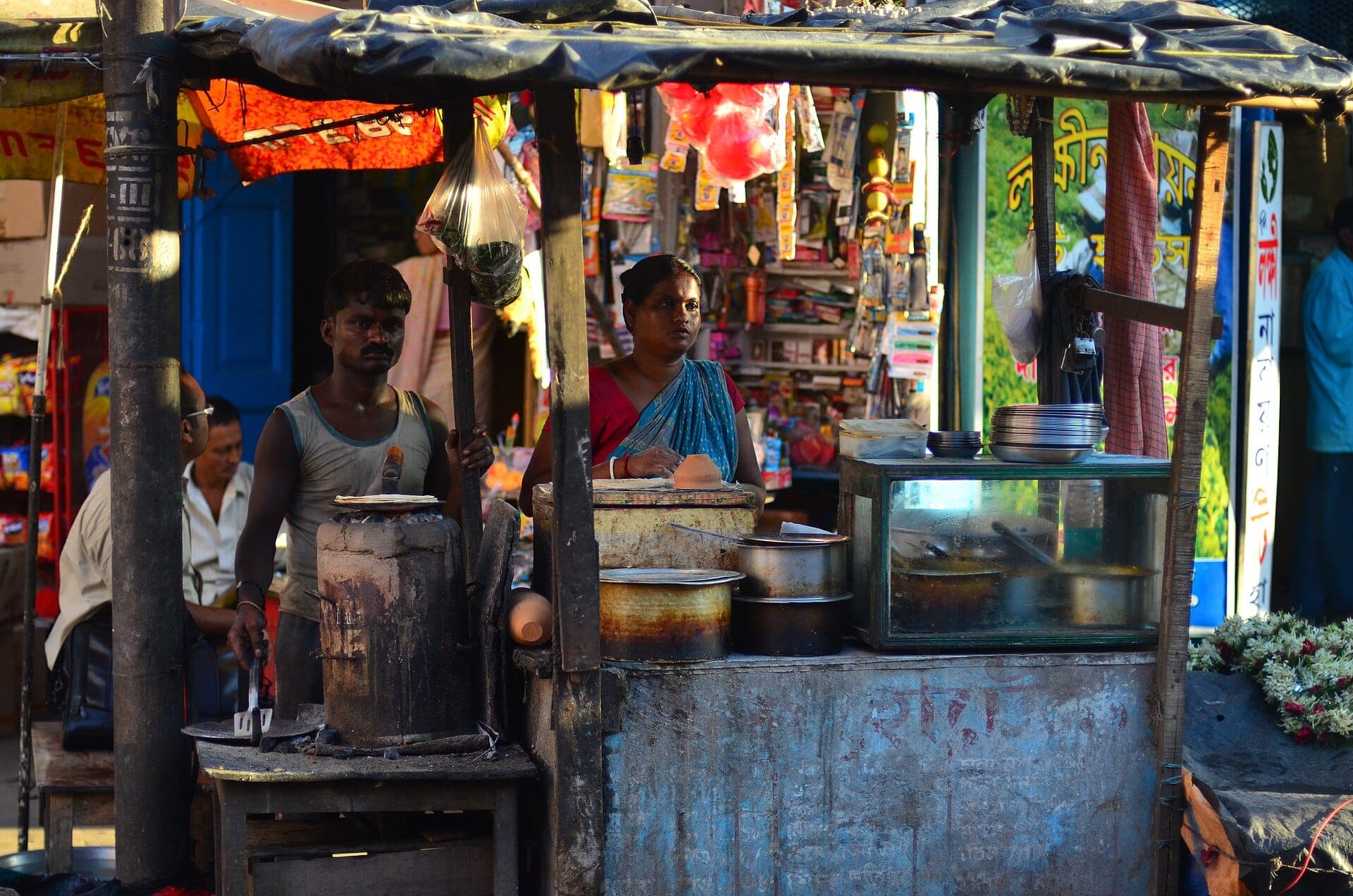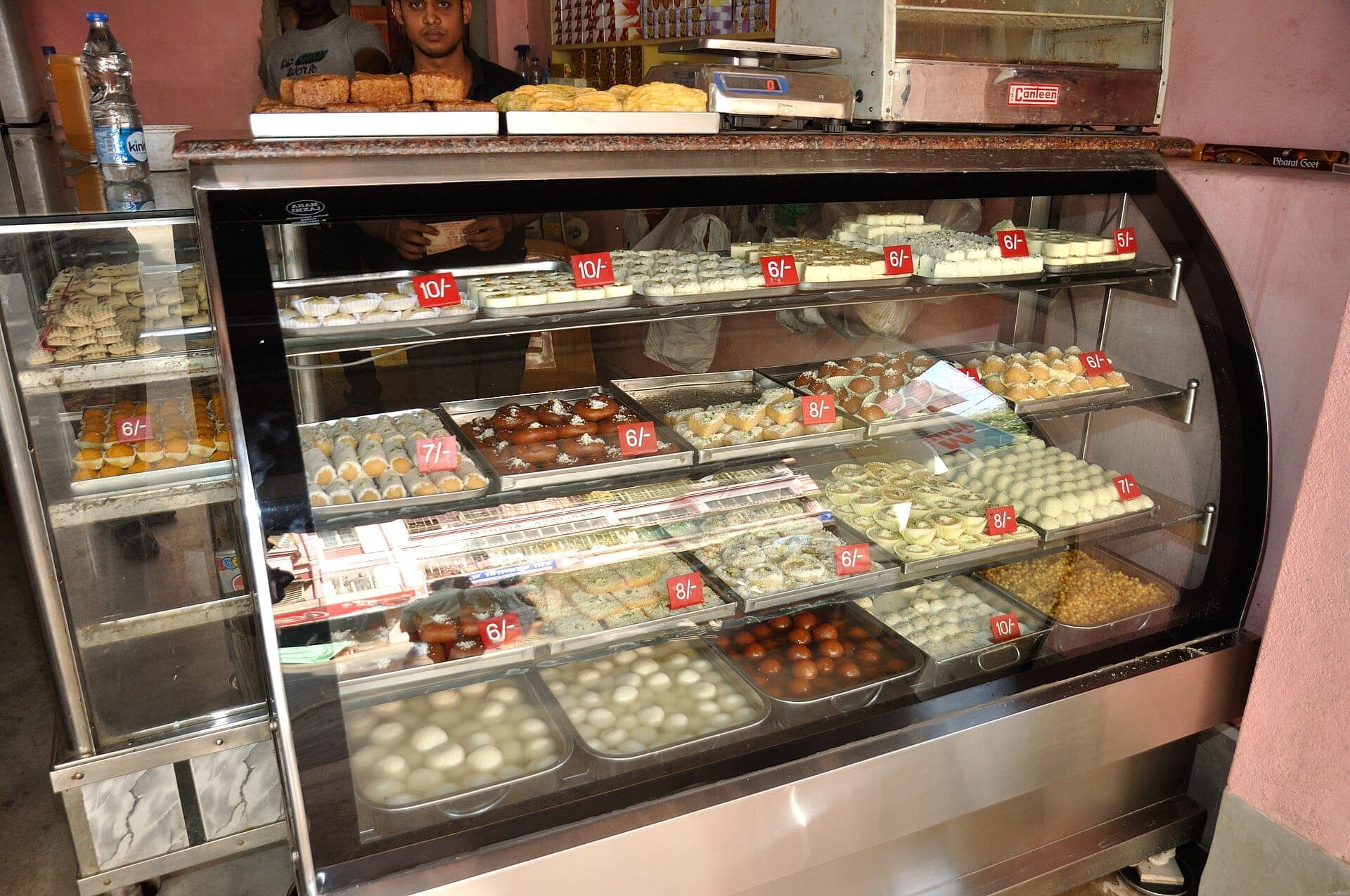
The shop is a counter, a set of steel trays, a marble slab at the back and a room behind that where the actual work happens. There are no tables. There have never been tables. You eat standing up, off a sal leaf, and you leave.
The chhena is made every morning: milk split with whey, drained, and then kneaded on the marble by hand. How long you knead it is the entire craft. Too little and it will not hold; too much and the sweet squeaks when you bite it, which is a fault you will be told about.
The eight weeks
From about the middle of December to the middle of February the shop becomes a different shop. Nolen gur, date-palm jaggery, arrives from the tappers, and every sweet on the counter gets a winter version.
The jolbhora is the one people queue for: a sandesh with liquid gur sealed inside it, so it collapses in the mouth. It cannot be made in advance and it cannot be made in March.
“Eleven months we sell sweets. Two months we sell the season.”
The supply problem
The sap only runs properly when the nights are genuinely cold, which in Bengal means a window of about eight weeks. Tapping is skilled, nocturnal, badly paid work, and the number of shiuli is falling every year.
What is sold as nolen gur outside the season is cane jaggery with a flavouring. Everyone in the trade knows this. Some of them sell it anyway.
Who takes it on
The founder's great-grandson runs it now and did an MBA first, which the older customers found funny and which turned out to matter: the shop has a cold chain, a second outlet, and ships nolen gur sweets by air in January.
The kneading is still done by hand on the same slab, by two men who have been doing it for thirty years, because nobody has built a machine that can tell when to stop.