The Ganga splits in Bengal. The main flow goes east into Bangladesh as the Padma; a western distributary comes down past Murshidabad and Nabadwip and becomes the Hooghly, and it is on that western channel, at a bend deep enough to float a ship and far enough upriver to be defensible, that Job Charnock's factory was established in 1690.
The problem started almost immediately. The Hooghly is a silting river. Its share of the Ganga's flow was declining, and as flow declines a river drops its load, and the channel shallows. By the nineteenth century the approach from the sea, particularly the James and Mary shoal, had killed more ships than any comparable stretch of water in India.
The barrage at Farakka
The engineering answer, argued over for a century and finally built in 1975, was a barrage at Farakka, 280 kilometres upstream, which diverts water from the main Ganga into a feeder canal and down the Hooghly to flush the channel.
It has partly worked and has cost a great deal. Bangladesh has objected for fifty years on the grounds that the water taken is water that does not reach it in the dry season, and the 1996 treaty that governs the sharing expires and is renegotiated under pressure. Silt accumulates behind the barrage. Erosion downstream of it has taken villages.
Kolkata Port meanwhile moved most of its heavy traffic downriver to Haldia. The docks at Kidderpore still work, but the large ships do not come up.
What is in it
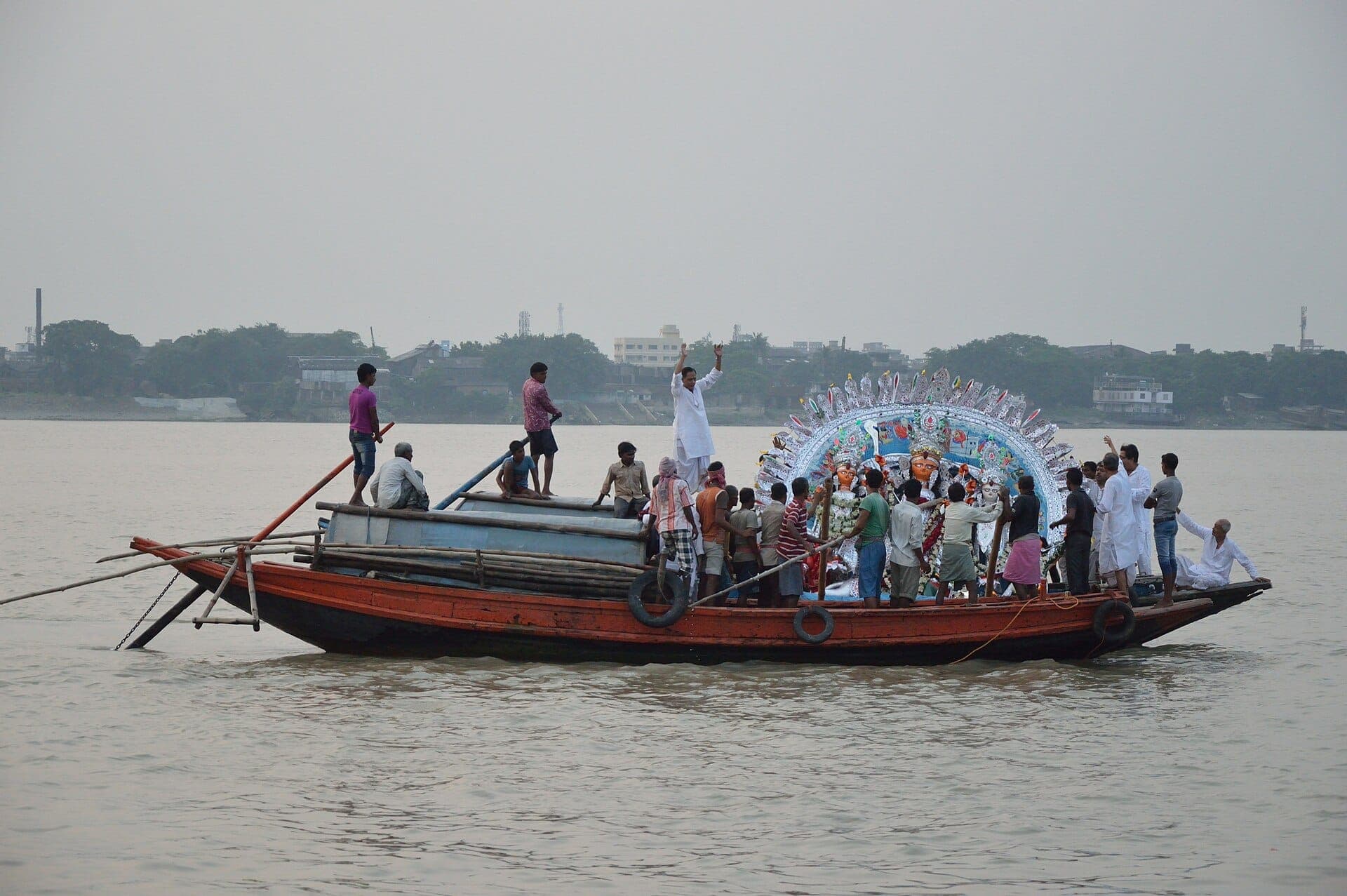
Sewage from a metropolitan area of fifteen million, of which a substantial share is untreated. Effluent from tanneries, though the Tangra ones were moved. Immersed idols, several thousand a year, and the paint on them was until recently full of lead and chromium; the state now requires water-based colours and the collection of frames after immersion, with uneven compliance.
Also: Gangetic dolphins, in small and declining numbers. Hilsa, running upriver to spawn between June and September, which is the fish the entire Bengali culinary year is organised around, and the catch has fallen sharply.
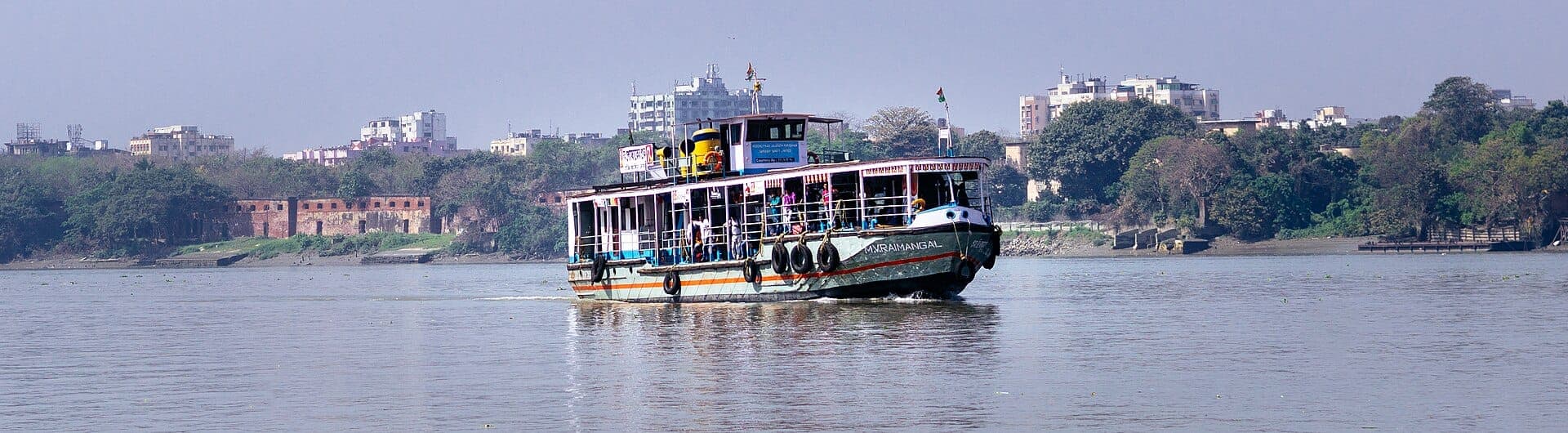
And the ferries. Twenty-odd crossings a day between Howrah and the Kolkata bank, five rupees, ten minutes, and the only way to see the bridge properly. On the water at six in the morning in December the whole thing is grey and the far bank is not visible and it is the best commute in India.