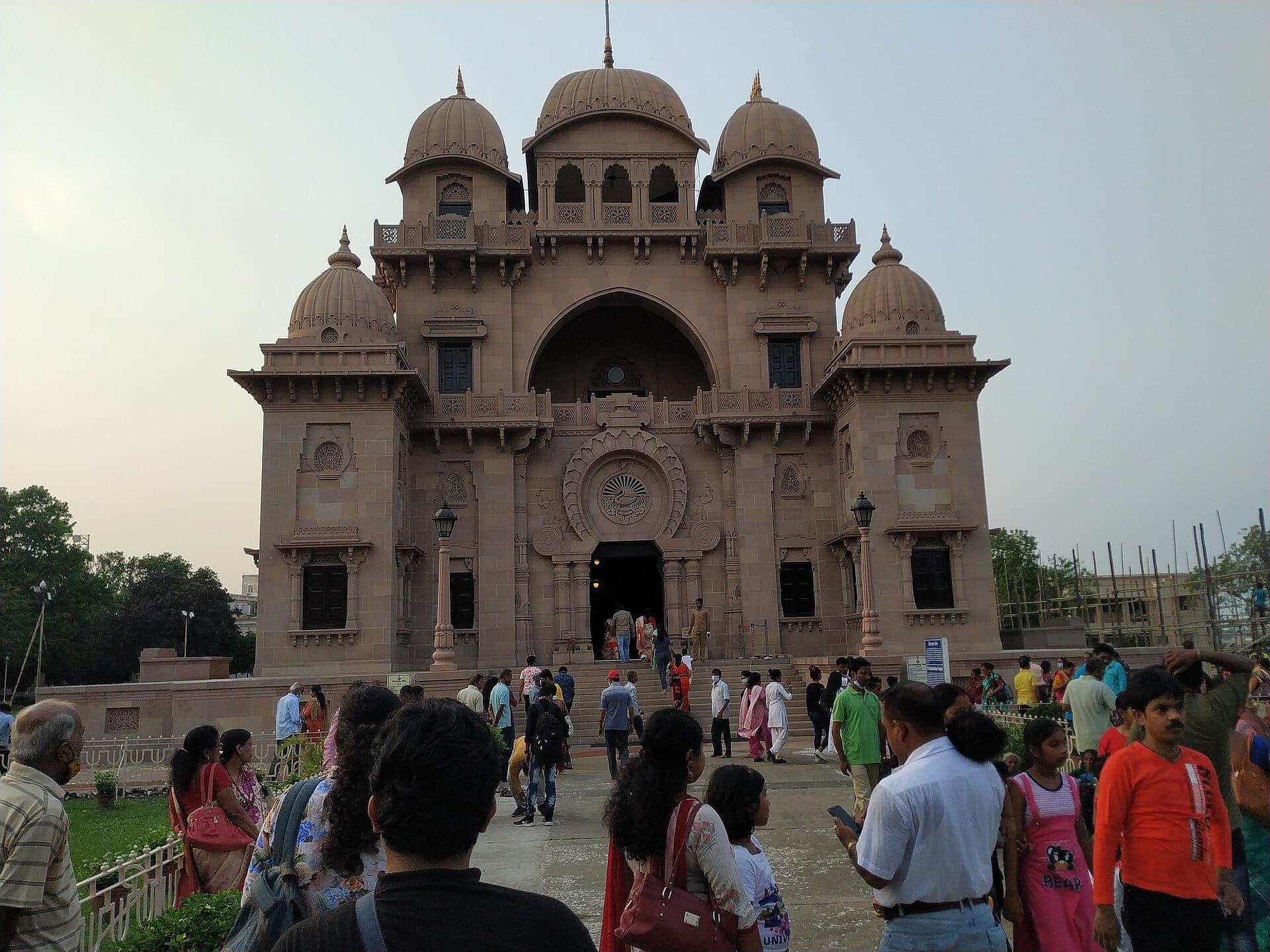
Vivekananda wanted a building that argued his position architecturally. The entrance suggests a Buddhist chaitya. The windows and balconies are Mughal and Rajput. The ground plan is a Christian cross. The central dome refers to a Bengali temple. None of this is accidental.
Construction ran from 1935 to 1938, after Vivekananda's death, following his sketches and Swami Vijnanananda's drawings. The main temple holds a marble image of Ramakrishna, set over the spot where his relics were interred.
Forty acres on the west bank, with the shrines of Sarada Devi and Vivekananda along the river. It is quiet in a way almost nowhere else in the metropolitan area manages.
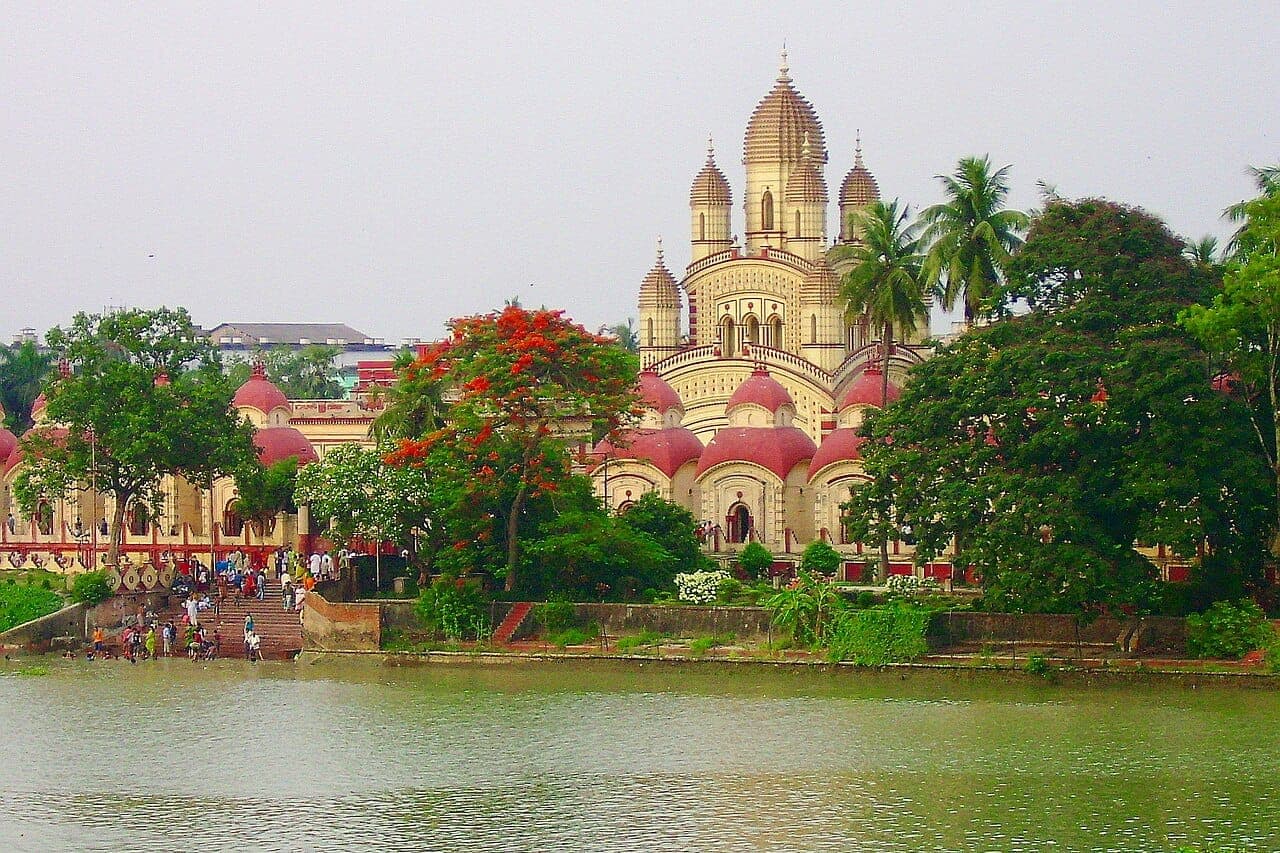
Take the ferry from Dakshineswar. Arriving from the water is the way the place was meant to be entered.
What the guidebook leaves out
The museum near the gate holds Vivekananda's Chicago robe and his letters. Most visitors walk straight past it to the temple.