The Company's settlement plan put trades into their own quarters, and the potters went here. The lanes have been in continuous use ever since, which makes Kumartuli one of the oldest continuously functioning craft districts in India.
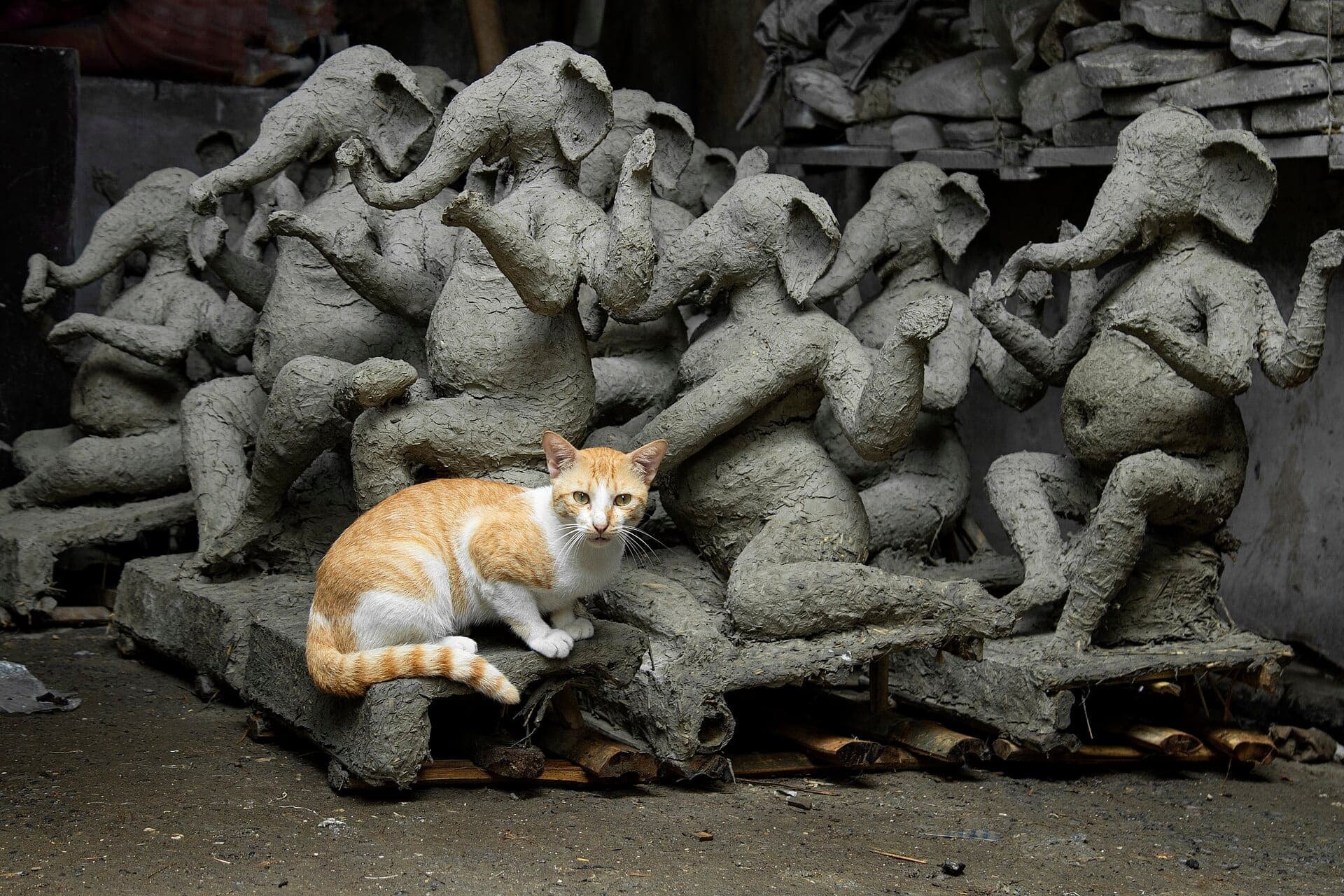
The work is seasonal and enormous. Several thousand idols leave these lanes each autumn for Pujas across the city, the state and, increasingly, the diaspora. A mid-sized figure takes four to six weeks; a major pandal commission takes months and a team.
The technique is specific: a bamboo frame, rice straw bound with jute rope, entel mati clay from the riverbed, then a finer bele mati mixed with husk, then paint, then the eyes last of all on Mahalaya.
It is under pressure. Clay costs rise as riverbank extraction is restricted, the lanes flood, and younger family members leave for salaried work. The number of workshops has been broadly flat for two decades while the number of Pujas has grown.
There is nothing to buy and no ticket. Go early, ask before photographing, and do not touch a finished face.
What the guidebook leaves out
The armature makers. The people who bind the straw are usually not the people whose names are on the studio, and they are the ones who decide whether the figure will stand.