Rani Rashmoni was a wealthy widow from a fishing-caste family, and when she set out to build a Kali temple in 1847 the orthodoxy told her that a non-brahmin could not consecrate one. She found a young priest, Ramkumar Chattopadhyay, willing to take a workaround, and the temple opened in 1855.
Ramkumar's younger brother came with him. That brother, Gadadhar, became Ramakrishna Paramahamsa, and for the next three decades he lived in a small room in the northwest corner of the courtyard, conducting the experiments in devotional practice that would reshape modern Hinduism and, through Vivekananda, carry it abroad.
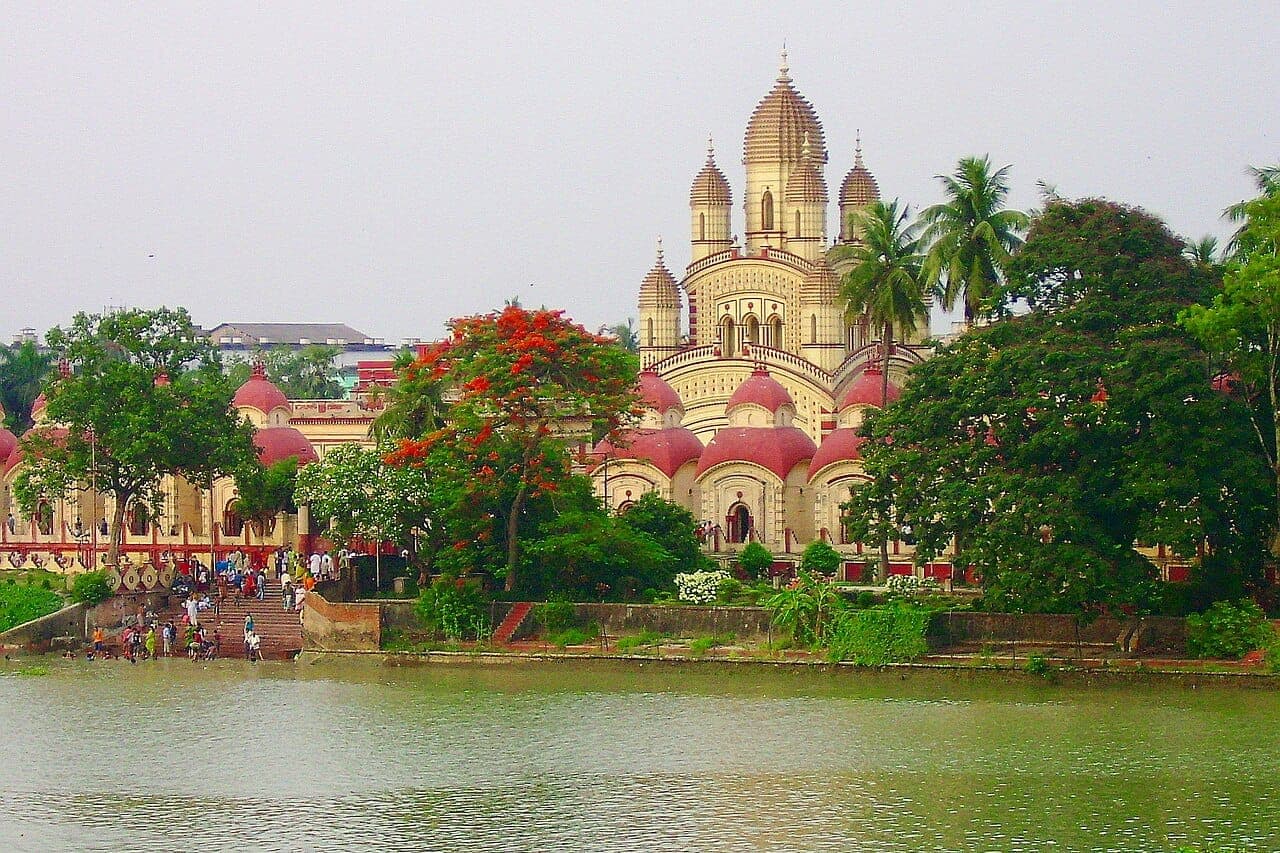
The temple is a nabaratna, nine spires over a raised plinth, flanked by twelve identical Shiva shrines along the river ghat. The image of Bhavatarini stands on a silver lotus.
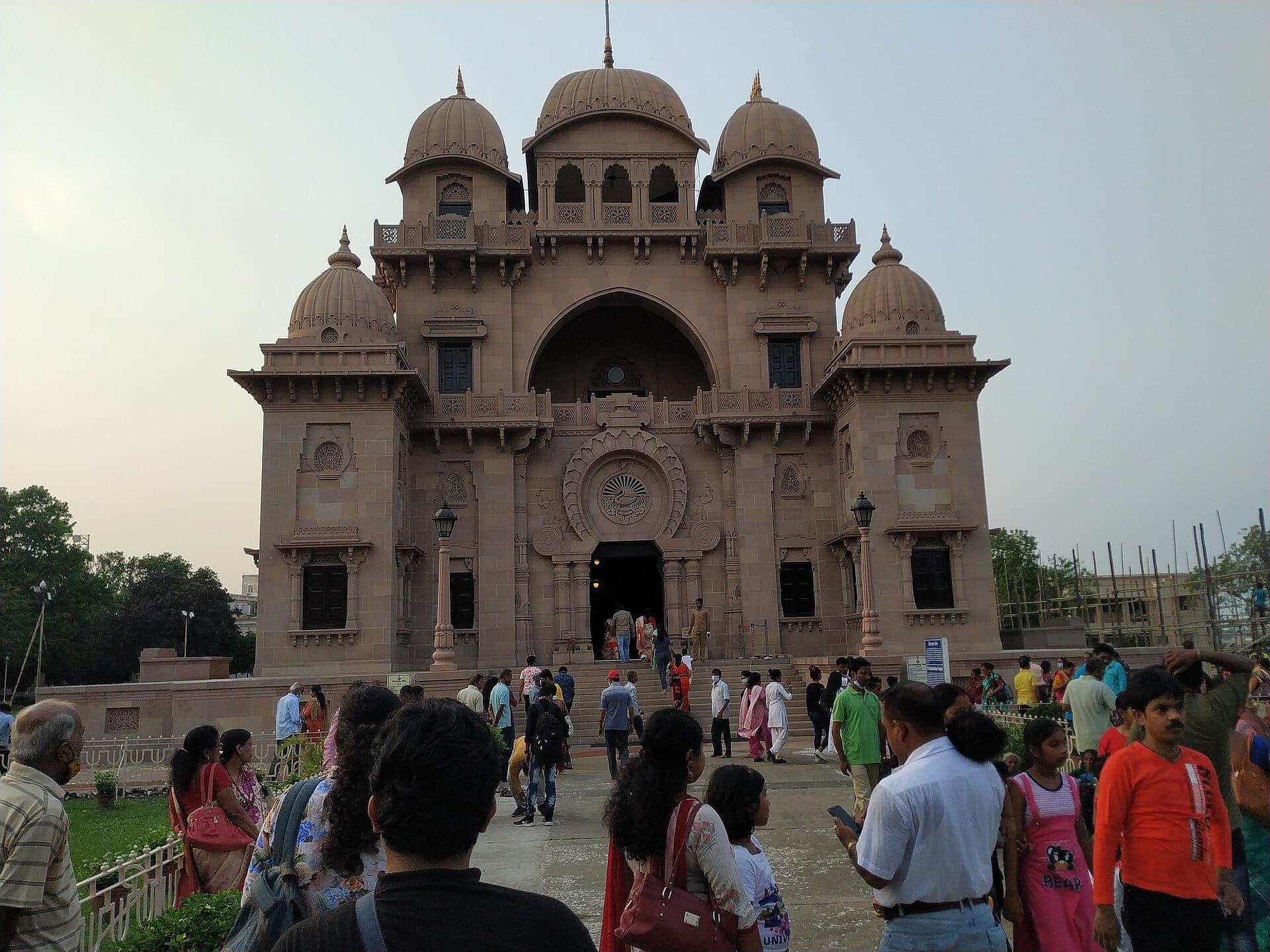
It is busiest at dawn and on Tuesdays and Saturdays. The ferry across to Belur Math takes about twenty minutes and is the correct way to make the trip.
What the guidebook leaves out
Ramakrishna's room is open and almost always overlooked in the rush to the main shrine. It is about three metres square.